2.10.2025
United Nations International Procurement Seminar
France, Italy, Austria and Switzerland will host an IPS so that companies can gain an accurate and in-depth understanding of the business opportunities offered by the United Nations. The IPS will be held in Geneva, at the Palais des Nations, on 19 and 20 November.
Our goal is to have all agency presentations during a webinar in early November so that during the IPS we can focus on in-depth sessions, workshops and one-on-one meetings. We believe that both UN buyers and suppliers from consortium countries will benefit from meeting in person.
https://www.legacoop.coop/seminario-internazionale-sul-procurement-delle-nazioni-unite-ips-2025/
https://www.ungm.org/Shared/KnowledgeCenter/Pages/IPS39_11_19_2025_to_11_20_2025
24.09.2025
Public Procurement of Innovation
Accounting for over 14% of GDP, EU public procurement could create a huge market for innovative products and services, but its potential in this area remains underutilised. The European Commission aims to improve public procurement practices, promote the demand of innovative goods, services and works in Europe, and foster the uptake of innovation in the EU. This will allow the integration of public demand into the innovation ecosystem and foster economic recovery.
Innovation procurement includes
- the development of innovative solutions through the procurement of research and development services
- the procurement of innovative solutions that are not yet available or do not exist on the market
- the procurement of innovative solutions that do exist, but are not yet widely available on the market
Through the public procurement of innovation, public buyers can
- shape markets and create new markets
- foster the market uptake of innovative products, services and works
- increase the quality of public services
- support access to markets for businesses, especially small and medium-sized enterprises (SMEs)
- boost smart investment
- have a large positive impact on mobility, health, education, etc. due to the high volume of public spending
What the European Commission is doing to promote public procurement of innovation
The European Commission supports public buyers looking to develop or purchase innovative solutions. It provides
- guidance on innovation procurement, including practical information on how to start and develop procurement of innovation projects
- webinars and podcasts to improve procurement professionalisation on strategic issues
The European Union also finances innovation procurement projects aimed at developing more innovation-oriented practices that contribute to smart, sustainable and inclusive growth. The aim is to stimulate the development of innovative enterprises in Europe.
To aid in the establishment of a collaborative framework with innovation ecosystems, the European Union funds
- Public Buyers Community which brings together public authorities and other stakeholders to meet and work together to actively advance public purchasing. Public procurers can find and join a community of practice that best fits their procurement interests and work in close collaboration with their fellow members to pool their resources, tools and expertise, and maximise their purchasing power and impact.
- Big Buyers Working Together which promotes collaboration between big buyers in Europe in strategic public procurement to help drive the market for innovative goods and services.
- Brochures
- Studies on how to price the value in Innovation Partnerships
- The theory of strategic options – Prof G. Azzone
- Coopetitive pricing for innovation value plus The Rationale – Prof P. Portier
- Estimating and negotiating approaches plus Rationales – Prof R. Servajean-Hilst
Events, calls for tender, and future developments
- Videos of all the previous webinars (e.g. Innovation Partnership, IPR, Preliminary Market Consultation, etc.)
More information
23.09.2025
International public procurement
Enlargement and European Neighborhood Policy
Public procurement accounts for 15-20% of global GDP and GPA commitments alone represent around EUR 1.3 trillion in business opportunities worldwide. The EU advocates open international public procurement markets and has committed itself to granting market access to its public procurement markets for certain goods and services. On the other hand, many EU companies are experiencing difficulties in getting access to non-EU countries’ public procurement markets. Some trading partners have maintained or introduced protectionist or discriminatory measures which hit EU companies. In response, the EU is taking action in several areas to ensure a level playing field and increase market opportunities for EU companies.
Agreement on Government Procurement
The main international agreement related to public procurement is the World Trade Organization’s (WTO) plurilateral Agreement on Government Procurement (GPA). The EU is represented in GPA negotiations by the European Commission (Directorate-General for Internal Market, Industry, Entrepreneurship and SMEs).
A revised GPA agreement was signed on 30 March 2012 and entered into force on 6 April 2014. The revised GPA provides for further opening up of the public procurement markets of the parties to the agreement. It has two elements: rules and obligations, and schedules of entities of each party whose procurement is subject to the agreement. The revised GPA indicates which market access opportunities must be open to international tendering. It applies to contracts worth more than specified threshold values.
22 Parties are currently part of the GPA: the EU with regard to its 27 Member States, Armenia, Australia, Canada, Chinese Taipei, Hong Kong (China), Iceland, Israel, Japan, Liechtenstein, Montenegro, Moldova, the Netherlands with respect to Aruba, North Macedonia, Norway, New Zealand, South Korea, Singapore, Switzerland, Ukraine, the United Kingdom, and the United States. Other WTO Members, including Albania, China, Costa Rica, the Kyrgyz Republic, Kazakhstan, Timor-Leste, and Tajikistan are negotiating accession to the GPA.
- Council Decision on the conclusion of the Protocol Amending the Agreement on Government Procurement (OJ, L 068 of 7.3.2014)
- Text of the Proposal for a Council Directive on the conclusion of the Protocol amending the GPA
- Statistics on international procurements covered by the GPA
- Statistics on EU public procurement covered by the GPA (2023 onwards)
International Procurement Instrument
Public procurement represents a substantial part of the EU economy and many countries around the world. However, in contrast to the EU’s policy favouring greater openness, many non-EU countries are reluctant to open their public procurement markets to international competition.
The International Procurement Instrument confirms the principle of openness of public procurement markets. At the same time, it aims to strengthen the position of the EU when negotiating access for EU businesses to the public procurement markets of non-EU countries and to clarify the legal situation for foreign bidders, goods, and services participating in the EU market.
On 29 January 2016, the Commission presented a revised proposal for an International Procurement Instrument.
The proposal amends a previous one from March 2012. In January 2014, the European Parliament had approved the position of the leading Committee on International Trade (INTA) on amendments to the original Commission proposal and had given a mandate to the rapporteur to enter into negotiations with the Council of the European Union. The Commission Work Programme for 2015 announced that the proposal would be amended in line with the priorities of the current Commission to simplify the procedures, to shorten investigations and to reduce the number of actors involved in implementation.
- Commission proposal 2012
- Impact Assessment (Executive summary)
- Consultation
- Amendments adopted by the European Parliament
Brexit
Following the entry into force of the Withdrawal Agreement between the European Union and the United Kingdom, EU public procurement legislation will continue to apply in the UK in accordance with Title VIII of the Withdrawal Agreement. The United Kingdom is covered by the WTO Agreement on Government Procurement (GPA) until the end of the transition period provided for by the Withdrawal Agreement and is treated as a Member State of the European Union.
Statistics on EU public procurement covered by the GPA (2023 onwards)
Page contents
15.09.2025
Foreign Subsidies Regulation
The regulation in a nutshell
In recent years, foreign subsidies appear to have distorted the EU’s internal market, by providing their recipients with an unfair advantage to acquire companies or obtain public procurement contracts. Prior to the FSR, subsidies granted by EU countries were subject to close scrutiny under EU state aid rules, while subsidies granted by non-EU governments were unchecked.
The FSR addresses this regulatory gap by enabling the Commission to assess and remedy distortions caused by foreign subsidies. If such subsidies are found to be distortive, the Commission can impose corrective measures to level the playing field.
Key procedures under the FSR
The FSR establishes 3 investigative procedures.
- Public Procurement Investigations
- Applies to bids in public procurement procedures where non-EU financial contributions are involved and the estimated contract value is at least €250 million.
- If the procurement is divided into lots, FSR obligations apply when the net estimated value exceeds €250 million, and the value of an individual lot or the total of all lots applied for is at least €125 million.
- This procedure is managed by the Directorate-General for Internal Market, Industry, Entrepreneurship and SMEs (DG GROW).
- Concentrations reviews (notification-based procedure)
- Applies to mergers and acquisitions (concentrations) where
- the acquired company, one of the merging parties, or the joint venture generates at least €500 million in EU turnover, and
- the involved parties received foreign financial contributions exceeding €50 million in the past 3 years.
- This procedure is managed by the Directorate-General for Competition (DG COMP).
- Applies to mergers and acquisitions (concentrations) where
- Ex officio market investigations
- Allows the Commission to launch investigations on its own initiative into all other market situations where foreign subsidies may cause distortions.
Who is responsible?
DG GROW is responsible for enforcing the Foreign Subsidies Regulation in foreign financial contributions to public procurement procedures.
DG COMPis responsible for enforcing the Foreign Subsidies Regulation in foreign financial contributions to concentrations.
The procedures conducted by DG COMP and DG GROW are distinct, therefore please make sure to address submissions to the relevant Directorate-General of the Commission.
18.08.2025
PPE+ 2025 training to begin in September
Following an extensive application process, PPE+ Europe 2025 has selected 44 public procurement professionals from 21 European countries for its second training programme aiming to support public buyers to get better value for public spending. The selected participants will begin their training on 15 September in Vienna.
Participants will gain in-depth insights into the Public Procurement Excellence Programme, learning directly from leading experts and practitioners. The training combines cutting-edge theory with hands-on practice and offers a platform for valuable exchange within the European procurement community.
The relevance and excellence of the program is underlined by the overwhelming amount of applications received this year. Participants will have more opportunities to join this training programme that will also take place in 2026 and 2027. More information about the 2024 edition can be found here. More information about the full training programme of the 2025 training can be found here.
12.08.2025
Commission launches review of Foreign Subsidies Regulation
The European Commission has launched today its first review of the Foreign Subsidies Regulation (‘FSR’). As a first step of this review, the Commission is seeking feedback from interested parties, with a deadline of 18 November 2025.
The Commission aims to collect feedback through:
- a public consultation to gather views on specific elements of the implementation and enforcement of the FSR from all interested parties, like companies, law firms, Member States, business associations, individuals or research community and
- a call for evidence seeking more general feedback from all interested parties on the main aims of the FSR review report, its scope and context.
The review report would focus on: (i) the assessment of foreign subsidies that distort the internal market, (ii) the application of the balancing test (i.e. whether positive effects of the foreign subsidy counterbalance its distortive effects), (iii) the review of foreign subsidies with a possible distortive effect in the internal market on the Commission’s own initiative, (iv) the notification thresholds and, (v) more generally, the level of complexity of the rules and the costs incurred by businesses.
Next steps
All parties who have an interest in the matter can submit their views on the Call for Evidence and respond to the questionnaire in any official EU language on the Commission’s Have your say portal until 18 November 2025. The Commission will use this feedback in the FSR review report that will be presented to the European Parliament and the Council.
Background
The Foreign Subsidy Regulation started to apply on 13 July 2023. This new set of rules enables the Commission to address any distortions to competition caused by foreign subsidies in the internal market. It allows the EU to ensure a level playing field for all companies, while remaining open to trade and investment. Foreign subsidies can reach the internal market through participation in any economic activity and in any sector. This includes acquisitions of control, participation in public procurement procedures and other forms of direct investments.
The FSR requires the Commission to review its practice of implementing and enforcing the Regulation by July 2026 and every three years thereafter and to present a report to the European Parliament and the Council, accompanied, if appropriate, by relevant legislative proposals.
For More Information
More information will be available on the Commission’s competition website and on the Commission’s “Have your say” portal.
Quote(s)

The first review report will be due in July 2026, three years after the Foreign Subsidies Regulation started applying. It will be an opportunity to take stock of the implementation and enforcement of the Regulation so far, and to envisage possible improvements. With today’s public consultation and call for evidence, Member States and stakeholders can submit their views and help the Commission review its FSR practice, so that it can best address distortions caused by foreign subsidies in the internal market, while minimising the regulatory burden.

Public procurement accounts for roughly 15% of the EU’s gross national product. Given the scale of this figure, Europeans expect that the selection process is fair and not distorted by subsidies coming from third countries.. However, monitoring of this objective should be as unbureaucratic and transparent as possible. I invite you, as a stakeholder, to take advantage of this opportunity to submit your comments regarding the complexity of the rules, the costs incurred as a result and to share your ideas for a possible simplification.
https://ec.europa.eu/commission/presscorner/detail/en/ip_25_1954
01.07.2025
OECD Public Procurement Forum 2025
In a tight fiscal environment, governments are expected to use their resources increasingly efficiently and effectively. Public procurement represents an average of 13% of GDP in OECD countries and makes government the primary buyer in sectors such as construction, health and education. Public procurement has modernised significantly in recent years, but much more can be expected from governments in this area.
The Global Public Procurement Forum aims at reviewing cutting edge public procurement practices across the world to ensure that public procurement is best used to achieve desired economic and social outcomes, while delivering substantial savings.
https://www.oecd.org/en/events/2025/07/2025-global-public-procurement-forum.html
27.06.2025
New tool supports public procurement decisions

The recently launched Procurement for Buyers tool helps contracting authorities identify which third-country bidders are eligible to take part in public procurement procedures in EU member states, based on the EU’s international commitments (such as the WTO Government Procurement Agreement and bilateral trade agreements).
A new add-on now allows authorities to quickly check which sectoral acts may apply to their contract.
For more details, read this article and visit the Procurement for Buyers portal.
https://public-buyers-community.ec.europa.eu/news/new-tool-supports-public-procurement-decisions
27.06.2025
First measure adopted under the International Procurement Instrument
On 19 June, the European Commission adopted a measure under the International Procurement Instrument (IPI) excluding Chinese companies from EU public procurement purchases of medical devices for contracts of a value equal to or exceeding €5 million. This first measure adopted under the IPI seeks to level the playing field for EU firms, as well as to incentivise China to cease its discrimination against EU firms and EU-made medical devices. The Commission remains committed to dialogue with the Chinese authorities. For more information, you can read the Commission press release on the matter, and the Commission Implementing Regulation 2025/1197 of 19 June 2025.
20.6.2025
Commission restricts Chinese participation in medical devices procurement
The European Commission decided to exclude Chinese companies from EU government purchases of medical devices exceeding €5 million.
This measure follows the conclusions of the first investigation under the International Procurement Instrument (IPI), and allows no more than 50% of inputs from China for successful bids.
This response is proportionate to China’s barriers, while ensuring that all the necessary medical devices are available for the EU healthcare system.
Exceptions will be in place where no alternative suppliers exist. The measures are consistent with the EU’s international obligations, including under the WTO framework, as the EU has no binding procurement commitments vis-à-vis China.
The measure seeks to incentivise China to cease its discrimination against EU firms and EU-made medical devices and treat EU companies with the same openness as the EU does with Chinese companies and products. This is a response to China’s longstanding exclusion of EU-made medical devices from Chinese government contracts.
Defending EU businesses from unfair treatment
Global public procurement, worth over €11 trillion per year, is an important business opportunity for European companies. The EU public procurement market remains one of the most open in the world. For example, Chinese exports of medical devices to the EU have more than doubled between 2015 and 2023.
At the same time China has erected significant and recurring legal and administrative barriers to its procurement market:
87% of public procurement contracts for medical devices in China were subject to exclusionary and discriminatory measures and practices against EU-made medical devices and EU suppliers, according to a 2025 Commission report.
The report was the result of the Commission’s first investigation under the IPI Regulation, launched on 24 April 2024.
The Commission has repeatedly raised this issue with the Chinese authorities, seeking a constructive and fair solution that would enable EU companies to access the Chinese market on terms comparable to those enjoyed by Chinese firms in the EU.
Despite these efforts, China has so far not offered specific commitments that would address the discriminatory measures and practices identified.
The Commission remains committed to dialogue and stands ready to intensify contacts with the Chinese authorities to address this discrimination.
The IPI is ultimately a tool to incentivize positive change and create leverage for fairer access. Should China offer concrete, verifiable, and satisfactory solutions that effectively address the concerns identified, the IPI framework allows for the suspension or withdrawal of measures.
For More Information
Quote(s)

Our aim with these measures is to level the playing field for EU businesses. We remain committed to dialogue with China to resolve these issues.
Source: https://ec.europa.eu/commission/presscorner/detail/en/ip_25_1569
Translations of EU AI model contractual clauses now available in 24 languages

To help public buyers procure AI responsibly, the community of practice has released an updated version of the EU model contractual clauses. These clauses support compliance with the EU AI Act – the world’s first broad regulation on AI, adopted on 13 June 2024.
The updated package includes:
- a full version for high-risk AI systems, aligned with the EU AI Act
- a light, customisable version for non-high-risk AI
- a commentary with guidance on how to use and adapt the clauses in practice
The documents are now available in 24 EU languages. Find out more on the dedicated resource page.
22.05.2025
Towards simpler, greener, stronger procurement: inside the SEGPP
The Stakeholder Expert Group on Public Procurement (SEGPP) has been recently renewed to provide high quality insight and expertise to the Commission and assist it in its work on the evaluation and revision of the EU 2014 public procurement directives in order to modernise and simplify the legislative framework, while ensuring resilience of the EU economy and its continuous greening.
Members of the group include individuals with a deep knowledge and experience in public procurement, and representatives of SMEs organisations, industry and business associations, national, local and regional authorities, national authorities, central purchasing bodies, civil society organisations and NGOs, and trade unions.
The first meeting of the new Stakeholder Expert Group on Public Procurement (SEGPP), held in February, focused on how to simplify the EU public procurement rules. During the second meeting, held in April, the group continued discussions on simplification and initiated discussion on EU preference. Discussions of the group are organised in a participatory way to give its members space for brainstorming and development of innovative ideas.
21.05.2025
EU Ecolabel shows the way to green procurement of paper products
Public buyers can make a step towards green procurement of paper products. The two newly released Practical guides for the use of the EU Ecolabel in the green public procurement of graphic paper, and of tissue paper and tissue products are here to help.
A third set of practical guidelines is also on the horizon, this time focusing on printed paper, stationery, and printed paper carrier bags.
Public procurement: a staple in the paper market
Despite digitalisation, public sector entities still much rely on paper for official records, legal documentation, and communication. In parallel, tissue paper products such as toilet paper, paper towels and facial tissues are indispensable in the daily operations of public facilities, making their sustainable procurement important.
By choosing responsibly sourced, sustainably produced and recycled paper, public buyers can make a tangible contribution to the green transition by helping to reduce deforestation, minimise waste, and promote resource efficiency – all without necessarily increasing their expenditure.
Why choose the EU Ecolabel?
The use of the EU Ecolabel – the official EU voluntary label for environmental excellence, with over 102.000 certified products across 25 products categories, in public procurement offers clear environmental, administrative and potential economic benefits.
Environmental: EU Ecolabel criteria are scientifically based, legally established and are third-party verified. They are developed through research and extensive stakeholder consultation. Criteria are regularly updated to reflect evolving environmental priorities and technological progress. With the EU Ecolabel certification, products are guaranteed best-in-class in terms of environmental performance, without compromising on performance!
Administrative: The EU Ecolabel helps streamlining public procurement procedures as public buyers can either simply require goods and services to be EU Ecolabel certified, or they can reference specifically identified EU Ecolabel criteria in the technical specifications and/or award criteria tender calls. Both options reduce verification efforts, as EU Ecolabel certified products – which have already been independently assessed against stringent requirements – already meet strict environmental standards.
Economic: The EU Ecolabel also supports cost-effective procurement by offering access to competitively priced goods and services, while helping contracting authorities to meet sustainability objectives without compromising on quality and on value for money.
New Practical Guides to help procurers
Designed to make green procurement more straightforward, the newly released Practical Guides on graphic paper and on tissue paper and tissue products clearly identify the most relevant and appropriate EU Ecolabel criteria that can be used when drafting technical specifications and award criteria in tendering processes. Recommended criteria include fibre sourcing, pulp bleaching, emissions to air and water, and energy consumption.
EU Ecolabel products successfully streamlined in green procurement practices
Several public administrations have successfully used the EU Ecolabel in their procurement processes for paper products.
The Slovenian Ministry of Public Administration has developed their own guidelines to facilitate public authorities in requiring Type 1 ecolabels, such as the EU Ecolabel when procuring stationary paper products. The guidelines stipulate that paper must be sourced from sustainably managed forests or recycled fibres, with verification through a Type I ecolabel. Bidders can demonstrate compliance using certifications such as the EU Ecolabel. These guidelines now support 180 public bodies in Slovenia in procuring eco-friendly paper more efficiently.
The Government of Flanders included sustainability criteria into its framework agreement for stationary supplies, including requirements aligning with the EU Ecolabel for paper. Suppliers were mandated to offer only recycled or sustainably sourced paper, ensuring compliance with recognised ecolabel certifications such as the EU Ecolabel. The goal is for at least 50% of office supplies to be sustainable; in practice, 75.34% of purchased paper products meet sustainability criteria. This initiative demonstrated the importance of ecolabels in public procurement, driving the adoption of environmentally friendly office supplies across government agencies.
Leaf through the Practical Guides for paper products
With the new EU Ecolabel Practical Guides, all Member States can now green their public procurement for paper! Make your procurement green today, download the guides, use the EU Ecolabel criteria, and share this valuable resource with your networks!
Don’t miss the webinar on the benefits of using the EU Ecolabel in green procurement on the 10 October morning.
Find EU Ecolabel certified products the ECAT catalogue, look for more tips on the Green Procurement page and follow us on LinkedIn to stay updated on the latest EU Ecolabel developments!
21.05.2025
Clarifying Third-Country Participation in EU Public Procurement: Q&A Now Available
The European Commission has released a dedicated Questions and Answers document offering key clarifications on the implications of the CJEU rulings in cases Kolin (C-652/22) and Qingdao (C-266/22). This guidance is intended to help assist public buyers in navigating the legal and procedural implications of the rulings, and is available on the website of the Directorate-General for Internal Market, Industry, Entrepreneurship and SMEs.
Q&A: Participation in the EU procurement market of bidders from non-covered third countries (cases C-652/22, Kolin, and C-266/22, Qingdao)
Description
This non-paper prepared by the Commission services* comes in response to queries received from different stakeholders (EXPP, public procurement review bodies’ network and the Council Working Party on public procurement), between October 2024 and March 2025, about the conditions for possible participation in the EU procurement market by bidders from non-covered third-countries in view of the recent judgments of the Court of Justice of the EU of 22 October 2025 in case C-652/22, Kolin, and of 13 March 2025, in case C-266/22, Qingdao.
* On the basis of their understanding of the Treaties, the public procurement directives and the case-law of the Court of Justice of the European
Union. It should be noted that, in any event, the binding interpretation of Union law is ultimately the role of the Court of Justice of the European
Union. This document does not change the legal framework.
Q&A
1. COVERAGE
1.1. How should contracting authorities / entities understand the reference in the Kolin judgment to operators of a “third country which has not concluded an international agreement with the European Union which guarantees access to public procurement in a reciprocal and equal manner” (hereinafter “non covered countries”)?
Contracting authorities / entities in the EU have an obligation to admit to a specific procurement procedure, and on a non-discriminatory basis, only operators from third countries with which the EU has international commitments in procurement (see points 41 to 43 of the Kolin judgment).
As regards operators from non-covered countries (see point 44 of the Kolin judgment), it is for each contracting authority / entity to determine whether it admits, or not, such operators to a public procurement procedure (see point 63 of the Kolin judgment).
The Union’s international commitments are defined in the respective international agreements – i.e. the plurilateral WTO Government Procurement Agreement (GPA) and other bilateral agreements, by which the Union is bound (European Economic Area, the stabilisation and association agreements with candidate countries, and other bilateral agreements with procurement commitments). These commitments determine whether a specific procurement is or is not covered by the Union’s international agreements.
Only a procurement that is carried out by an entity specified in a given agreement (‘covered entity’) purchasing goods, services or construction services listed in that agreement (‘covered goods / services’) and of a value exceeding the threshold values specified in that agreement, is covered by that agreement.
1.2. Can the Commission IT tool (available here) which provides information on the EU’s agreements with third countries concerning public procurement, be deemed accurate? Should contracting authorities rely solely on this tool, without additional verification or further verification being necessary to confirm whether third countries have complied with the commitments included in these agreements?
Notwithstanding the practical added value of the Commission tools listed below, it is the sole responsibility of the contracting authorities / entities in the EU to assess whether the bidder is established in a country that has or, does not have, an international agreement with a chapter on public procurement.
For that purpose, they can use the dedicated online tool – Procurement4Buyers – to check whether a given tender is, or is not, covered by EU’s international commitments: https://webgate.ec.europa.eu/procurementbuyers/#/procumementlocation
Here is a link to the WTO GPA website where the EU’s commitments under the GPA can be found:
https://www.wto.org/english/tratop_e/gproc_e/gp_app_agree_e.htm
For an overview of all international agreements in which the Union may have procurement commitments, please visit: https://policy.trade.ec.europa.eu/eu-trade-relationships-country-and region/negotiations-and-agreements_en.
1.3. What if there is no reciprocity in practice in certain cases with third countries that have signed an agreement with the EU? Should a contracting authority exclude such bidders also?
If a given procurement procedure is covered by the Union’s international commitments, contracting authorities / entities do not need to assess if access to the third country procurement market has been granted in a reciprocal and equal manner. Concerning reciprocity and equality of market access, economic operators from a third country with which the EU has international commitments (a party to the GPA or to a bilateral agreement with procurement commitments) have secured access to the EU procurement market to the extent of the commitments undertaken by the Union in those agreements.
1.4. Can the Kolin judgment be applied also to goods and services originating in non-covered countries? Do contracting authorities have a similar margin of discretion to reject tenders if the tenderer offers goods from non-covered countries?
The Kolin judgment deals only with the question of access by economic operators from non-covered countries and remains silent in relation to access for goods (or services) that originate in non-covered countries and are not governed by the Union’s international commitments.
Article 85 of the Utilities Directive 2014/25/EU establishes rules for the award of a supply contract consisting also of products originating in non-covered countries. This article provides that tenders submitted for the award of a supply contract may be rejected where the proportion of the products originating in non-covered countries exceeds 50 % of the total value of the products constituting the tender. In addition, if two or more tenders are equivalent (up to 3% price difference being considered equivalent), preference should be given to tenders that may not be rejected.
1.5. Is it correct to interpret this judgment as not affecting procedures below EU thresholds?
The EU’s common commercial policy, which is at the core of the Court’s reasoning, is not subject to any threshold or the existence of a cross-border interest, unlike the freedoms of the internal market, which are the basis of the public procurement directives and apply only above certain thresholds. Therefore, the principles of the Kolin judgment apply to any public procurement procedure, independently of EU thresholds and the value of the tender.
2. CONSORTIA / SUB-CONTRACTORS / COMPANIES PROVIDING CAPACITY
2.1. How to interpret the judgment regarding members of consortia?
The Kolin judgment does not pronounce in an explicit manner on consortia or members of consortia from non-covered countries that submit tenders in EU procurement procedures. It is therefore up to each contracting authority / entity to decide on a case-by case basis whether to admit the participation of economic operators from non covered countries in a specific procurement procedure, either in their own capacity or as members of consortia.
In this respect, Article 3 of the International Procurement Instrument Regulation* (‘IPI’) and point 1 of the IPI Guidelines*, which refers to the determination of the origin of economic operators for the purposes of the application of that Regulation, may be used as an inspiration for determining the origin of economic operators. When allowing participation of consortia, or members of consortia from non covered third countries, contracting authorities / entities may adjust the evaluation results arising from a comparison between the tenders submitted by such consortia and those submitted by other tenderers.
* Regulation (EU) 2022/1031 of the European Parliament and of the Council of 23 june 2022 on the access of third-country economic operators, goods and services to the Union’s public procurement and concession markets and procedures supporting negotiations on access of Union economic operators, goods and services to the public procurement and concession markets of third countries (International Procurement Instrument – IPI)
* Guidelines to facilitate the application of the IPI Regulation by contracting authorities and contracting entities and by economic operators’ (2023/C 64/04)
2.2. How should the ruling be interpreted regarding subcontractors and companies, whose capacities the tenderer relies on?
The Kolin judgment does not pronounce in an explicit manner on subcontractors, or the use of the capacities of economic operators from non-covered countries, in EU procurement procedures. It is up to each contracting authority / entity to decide on a case-by-case basis whether to admit or not tenders proposing sub-contractors from non-covered countries in a specific procurement procedure. It is also up to each contracting authority / entity to decide to accept tenders relying on the capacities of companies from non-covered third countries.
2.3. Is Article 9 of classical Directive 2014/24/EU (and its equivalents in other Directives) affected/repealed?
Article 9 of Directive 2014/24/EU (and equivalent in other Directives) does not concern access by third country economic operators to public procurement covered by the EU directives on public procurement. It is therefore not affected
by the Kolin judgment.
3. LEGISLATING ON ACCESS / TREATMENT
3.1. How should point 62 of the Kolin judgment be interpreted? Does the national legislation need to be amended following the Kolin judgment, or is this completely prohibited due to EU exclusive competence?
To the extent that the national legislation of a Member State contains provisions concerning access, or lack thereof, to public procurement within the EU for economic operators from non-covered countries, that legislation should be amended as appropriate to take the judgment into account. This is because such provisions were adopted in disregard of the EU’s exclusive competence on this matter.
In the meantime, those national provisions – adopted in breach of EU exclusive competence – cannot be applied. It is incumbent on the contracting authority to decide whether to accept or exclude economic operators from non-covered
countries (see point 64 of Case C-266/22, Qingdao).
3.2. Should specific national rules be introduced for the legal protection of economic operators from non-covered countries? Can we draw some inspiration from Article 10 of the IPI Regulation, or is this not possible
according to the judgment?
As confirmed by the Court in point 62 of the Kolin judgment, Member States cannot legislate or adopt legally binding acts of general application concerning access to the EU public procurement market by operators from non-covered third countries. Domestic legislation ensuring the legal protection of economic operators having or having had an interest in obtaining a particular contract, as stated in Article 10 of the IPI Regulation, may apply to operators from non-covered countries, provided that it does not build in the principles and rules laid down by Directives 89/665/EEC and 92/13/EEC. As stated by the Court in para 66 of Kolin, any remedies available to operators from non-covered third
countries are solely within the remit of national law.
3.3. When conducting a public procurement procedure, could a contracting authority (e.g. a Ministry) be seen as a ‘national authority’ that, in line with the Kolin judgment, is not empowered to take decisions concerning access by economic operators from non-covered countries?
In the Kolin judgment the Court ruled that Member States, including any national authority that has the power to adopt acts of general application, cannot adopt any acts of general application specifically intended to determine arrangements under which economic operators from non-covered countries may participate in PP procedures in the EU.
In contrast, when a Ministry conducts a public procurement procedure to purchase goods or services, it acts as a contracting authority in a single procurement procedure.
4. WHAT SHOULD GUIDE THE CONTRACTING AUTHORITIES / ENTITIES’ DECISION
4.1. What should guide the contracting authority in its decision regarding participation and the terms of participation? What criteria or legal basis should this decision be based upon?
And who decides upon these criteria? May Member States decide that contracting authorities must base their decision to allow or deny an economic operator market access on certain criteria, such as ensuring fair competition?
And if not, who then decides what the contracting authorities should base their decisions upon?
As confirmed by the Court in the Kolin judgment, any matter or condition related to access by economic operators from non-covered countries to the EU public procurement market falls within the EU’s common commercial policy, which is an exclusive competence of the Union. Therefore, it is only the Union that may legislate or adopt other acts of general application in this respect, unless it decides to empower Member States to do so. The Union has not empowered Member States in this respect. Consequently, Member States cannot legislate / adopt legally binding acts of general application concerning access by, and treatment of, operators from non-covered countries in the EU public procurement market. In the absence of acts adopted by the Union, it is for each contracting authority / entity to decide whether economic operators of a non-covered country should be admitted or not to a public procurement procedure and as regards the criteria for that decision.
4.2. Should the decision of the contracting authority be made on a case-by-case basis, always considering the specifics of the contract and the economic operator? Or can the contracting authority, for example, make internal guidelines for their decisions? Could the contracting authority, for example, decide to always exclude economic operators from all third countries or certain third countries? This would not constitute national legislation, but just an internal policy for that specific contracting authority.
Member States authorities cannot adopt any rule of general application regarding the treatment or legal protection of economic operators from non covered countries, or any other matter or condition related to access by economic operators from non-covered countries to the EU public procurement market.
Individual contracting authorities may take decisions as regards their own procurement procedures concerning access by non-covered economic operators, either on a case-by-case basis, or following a non-binding uniform approach.
5. TREATMENT OF BIDDERS FROM A THIRD COUNTRY WHERE THE CA/CE DECIDED TO ACCEPT THEM
5.1. May a contracting authority apply the same tender conditions to suppliers covered and not covered by EU international agreements when it decides to give access to a procurement procedure for both?
Yes, the Court acknowledged at para 63 of the Qingdao judgment that this is permissible, as long as this occurs on the basis of national law, not Union law or transposition thereof. Indeed, there is no EU legal basis that ensures no less
favourable treatment for economic operators from third countries which have not concluded an international agreement with the EU, or which guarantees access for their economic operators to public procurement in the Union.
The contracting authority may decide nevertheless to apply the same conditions to tenders from non-covered third countries and treat them no less favourably than the tenders submitted by economic operators from EU / covered countries.
However, economic operators from non-covered countries do not enjoy a right of redress under the national legislation transposing the EU legislation (paragraph 66 of the Qingdao judgment).
5.2. Does Union law prevent a contracting authority from treating a tenderer from a non-covered country less favourably even if this was not provided for in the tender documents?
Union public procurement law does not presently cover such third country economic operators. The only legal constraints concerning their treatment stem from national legislation that is not transposing EU law.
5.3. Should a contracting authority’s decision to allow or prohibit participation of suppliers not covered by EU international agreements be clearly indicated in the procurement documents, including a description of which conditions apply equally, and which differ?
Contracting authorities may indicate in advance in the tender documents their decision to accept or not participation of non-covered third country economic operators and, if they admit them, the arrangements applicable to their tenders.
They may also decide not to make this known in advance. In the absence of any reference to this matter in the contract notice / tender specifications, the contracting authority / entity still has the possibility to accept or to reject a
tender from an economic operator from a non-covered country at any moment
during the procurement process.
5.4. If a buyer allows the participation of economic operators from non-covered
countries in procurement, in what way can the buyer adjust the procurement results? Is it optional or mandatory? Should the buyer follow certain rules while adjusting the procurement results, and if so, which ones? May contracting authorities apply the provisions of IPI regarding the ‘adjustment of points’ as per Article 2, paragraph 1, item d) in the procurement documentation?
As stated in point 63 of the Kolin judgment, if the contracting authority/entity admits such economic operators in a specific public procurement procedure, it is for that authority/entity to decide “whether provision should be made for an
adjustment of the result arising from a comparison between the tenders submitted by those operators and those submitted by other operators”.
In doing so, it could take inspiration from the rules under the second subparagraph of Article 6(8) of Regulation (EU) 2022/1031 related to the International Procurement Instrument (IPI), or decide to apply any adjustment mechanism it may consider appropriate for a specific public procurement procedure.
If the contracting authority / entity accepts the participation of economic operators from non-covered countries in a procurement procedure, it may specify in the individual tendering documents the adjustment mechanism it may
decide to use.
6. RIGHTS OF OPERATORS FROM NON-COVERED COUNTRIES
Are operators from non-covered countries permitted to invoke national
provisions based on EU public procurement law in an appeal procedure? If not, how can legal remedies be ensured?
National authorities cannot interpret the national provisions transposing EU public procurement law as also applying to economic operators from non covered countries (see point 65 of the Kolin judgment). An action by those operators claiming that the contracting authority / entity has infringed certain requirements can be examined only in the light of national law and not of EU law (see point 66 of the Kolin judgment and point 66 of the Qingdao judgment).
6.2. How should we interpret certain requirements, such as transparency and proportionality, and infringements of such principles in the scope of only national law?
Economic operators from non-covered countries do not enjoy any rights deriving from EU public procurement law, including requirements for transparency and proportionality enshrined in EU law and transposed into the national legal order.
It is open to competent national authorities to identify other national provisions (not transposing EU public procurement law) on which such economic operators might rely.
6.3. Could national contract law (for example, rules on “culpa in contrahendo” as interpreted by national civil courts) be considered such a “national law”? However, if this national law grants economic operators from 3rd countries legal standing and in this way grants them (an enforceable) “access” to a procurement procedure – would this be in line with the Kolin judgment (because it would not be a specific procurement provision)?
It is for the competent national authorities to identify other national provisions (not transposing EU public procurement law) on which such economic operators may rely.
National contract law cannot provide access to participate in a procurement procedure, as giving such access is a decision to be taken by the relevant contracting authority/entity. However, it might, in some cases, provide access
to a national civil or administrative legal remedy that does not constitute transposition of the EU public procurement directives.
6.4. How should compliance with the rule of law principle be ensured?
Contracting authorities/ entities may base themselves on national legislation that does not transpose EU law.
6.5. In the light of the ECHR, Member States must grant access to courts in “civil matters” (procurement falls within the scope of Article 6 ECHR). What should Member States do to fulfil this obligation, if operators from third countries are to be excluded and cannot rely on the EU Remedies Directive? Would national law granting them access to courts be considered incompatible with Union Law (exclusive competence)?
Nothing in the Kolin judgment relates to access to justice or to the right to a fair trial. Rather, the judgment concerns only the substantive rights of access to procurement procedures and remedies that economic operators may enjoy
exclusively as a matter of national law.
Economic operators from non-covered countries do not enjoy rights deriving from EU public procurement law, and in particular the remedies system based on the provisions of Directive 89/665/EEC and Directive 92/13/EEC, as amended by Directive 2007/66/EC and Directive 2014/23/EU, and transposed into national law. National review bodies may identify other national provisions that may apply in such cases. Accordingly, any possible issue of compliance with the ECHR would concern national law only and would be unrelated to any instance of implementation of EU law by a Member State.
18.06.2025
Commission refers GERMANY to the Court of Justice of the European Union for incorrect transposition of the EU public procurement Directives
Today, the European Commission has decided to refer Germany to the Court of Justice of the European Union for incorrect transposition of the EU public procurement Directives (Directive 2014/24/EU and Directive 2014/23/EU).
First, the Commission considers that German law does not require from contracting authorities that they provide detailed information to tenderers after the conclusion of the contract to trigger the start of the shortened period for access to review. This makes it difficult for bidders to decide whether and by when to launch a review.
Secondly, the definition of ‘contracting entity’ in German law lacks clarity, complicating the selection of the appropriate tendering procedures.
Thirdly, German law does not require contracting entities in the postal sector to apply public procurement rules.
The Commission sent a first letter of formal notice in January 2019, followed by an additional letter of formal notice in July 2019 and a reasoned opinion in July 2021.
Despite some of the identified grievances having been resolved, the Commission considers that efforts by the authorities have, to date, been insufficient and is therefore referring Germany to the Court of Justice of the European Union.
Background
Public procurement rules allow businesses to apply for access to public contracts and allow public authorities to find the best value for money when they decide to procure goods, services or works. Competition in the market allows for responsible spending of public money. The provision on postal services ensures that contracting entities carrying out postal activities implement public procurement procedures if they fulfil the relevant conditions. In July 2021, the Commission issued a reasoned opinion identifying several provisions in the German law that do not comply with the directives.
The Commission has been in regular contact with German authorities. While some issues raised—such as the method for calculating the value of architectural service contracts—have been addressed, three out of the eight concerns outlined in the reasoned opinion remain unresolved. These unresolved issues continue to restrict both the scope of application and access to review procedures.
For More Information
Infringement decisions database and infringements map and graphs
June 2025 infringement package
Infringement procedure Germany (INFR(2018)2272)
Source: https://ec.europa.eu/commission/presscorner/detail/en/ip_25_1500
Commission calls on SLOVENIA to comply with public procurement rules
The European Commission decided to open an infringement procedure by sending a letter of formal notice to Slovenia (INFR(2025)4011) for failing to comply with European public procurement rules. Directive 2014/24/EU on public procurement establishes the procedures for award of public contracts by Member States’ authorities. The Directive provides for a few exceptions where national authorities are not required to follow these procedures. An amendment of the Slovenian Pharmacy Act exempts public pharmacy institutes from carrying out public procurement procedures for the purchase of medicines. The Commission considers that this exemption contravenes the obligations of the Directive. The Commission is therefore sending a letter of formal notice to Slovenia, which now has two months to respond and address the shortcomings raised by the Commission. In the absence of a satisfactory response, the Commission may decide to issue a reasoned opinion.
Source:
18.05.2025
Europe and Australia commit to Security and Defence Partnership
European Commission President Ursula von der Leyen and European Council President Antonio Costa met Prime Minister Anthony Albanese today and agreed to start negotiations on a Security and Defence Partnership (SDP) at the G7 Leaders’ Summit in Alberta, Canada.
The Partnership will provide a framework for current and future cooperation including in areas such as defence industry, cyber and counter-terrorism. Existing SDPs the EU has with other countries include cooperation on cyber, countering hybrid threats, maritime security, non-proliferation and disarmament, space and economic security.
A Security and Defence Partnership (SDP) aims to strengthen cooperation on global security challenges. It does not have military deployment obligations.
Discussions on an SDP with the EU and renewed engagement to conclude an Australia-EU Free Trade Agreement, demonstrate strong momentum in the Australian – Europe relationship.
Negotiation of an SDP will remain separate to efforts to conclude an Australia-EU Free Trade Agreement that we are focussed on taking forward in Australia’s national interest.
Quotes attributable to Prime Minister Albanese:
“I am pleased to announce we’re stepping up our cooperation with the European Union today.
“We see how deeply connected Europe’s security and the Indo-Pacific region have become.
“I very much welcome the EU’s offer for a Security and Defence Partnership and Australia will warmly take it up and commence work immediately.
“This will open the door to joint defence procurement opportunities and will benefit both our industries and our security.
“At a time of global uncertainty, it is our collective responsibility to work together to uphold peace, security and economic prosperity.
“That is what I will continue to do every day and that has been a key take out of our work here at the G7 today.”
Quotes attributable to President of the European Commission, Ursula von der Leyen:
“In a time of rising tensions and strategic competition, trusted partners must stand together.
“Europe and Australia’s enduring friendship enters a new chapter today.
“Recognising the shared security of Europe and the Indo-Pacific, we are launching talks on a Security and Defence Partnership.
“We’re also committed to advancing free trade negotiations—because economic security matters too.”
Quotes attributable to President of the European Council, Antonio Costa:
“Australia is an important partner for the European Union.
“We share the same values and a strong commitment to multilateralism and the rules-based global order.
“Europe’s and the Indo-Pacific’s regions are connected.
“Opening negotiations on a Security and Defence Partnership opens new opportunities to further strengthen our cooperation.”
Source: https://ec.europa.eu/commission/presscorner/detail/en/statement_25_1553
Key legal aspects of Public Procurement of Innovation (PPI) tenders
Designing a successful PPI tender can be challenging. Discover the key legal considerations to ensure transparency, fair competition and the right balance to foster innovation.
Procure Innovation EU
This CoP aims to enhance the uptake of innovation procurement in the European Economic Area (EEA).
Insight No 9. What are the main legal aspects for designing a PPI tender?
Description
Designing a Public Procurement of Innovation (PPI) tender requires a deep understanding of the legal framework. The objective is to balance flexibility for innovation with legal certainty, transparency and competition. Here are the key legal considerations and red flags consider when preparing a PPI tender.
File
Top takeaways from the third EU Building Information Modelling (BIM) meeting
The EU BIM Public Officials Group held its third meeting on 24–25 April in Warsaw, bringing together experts to exchange knowledge and best practices. Discover the key insights and materials shared at the event.
BIM and Public Procurement
BIM is a valuable tool and collaboration method in the design, construction, maintenance and management of built assets.
Third meeting of the EU BIM Public Officials Group
Description
The third meeting of the EU BIM Public Officials Group took place on 24–25 April in Warsaw, Poland.
Below you can download the key materials and outcomes shared during the event.
File
15.05.2025
Driving change with the Zero-Emission Bus Systems and Services community
The Zero-Emission Bus Systems and Services community of practice connects public buyers, experts and operators to share knowledge and tackle challenges together. Become a member to access expert advice, resources and events that support cleaner bus fleets across Europe.
Zero-Emission Bus Systems and Services
The CoP will focus on advancing the procurement of zero-emission buses and related infrastructure.
Supporting zero-emission bus procurement through a community-based approach

The transition to zero-emission buses is gaining momentum—but it is no easy task. Procuring and operating clean bus fleets involves more than just vehicle specifications. Public buyers must also navigate complex decisions around energy systems, charging infrastructure and depot upgrades.
Thanks to EU-level CO₂ reduction targets and green public procurement goals, zero-emission fleets are becoming more common. But many cities—particularly small and medium-sized ones—still face serious challenges, from high upfront costs to limited technical expertise. And while countries like the Netherlands, Finland, Iceland and Norway are leading the way, much of Central and Eastern Europe is still catching up. Even in major markets such as Germany and France, zero-emission buses represent just one in three new purchases. The shift is underway, but progress is uneven.
This is where the Community of Practice (CoP) on Zero-Emission Bus Systems and Services (ZEB) comes in. Set up under the Big Buyers Working Together initiative, the CoP connects a growing network of more than 40 public buyers, operators, manufacturers and experts. Together, they are building a shared space for learning, collaboration and exchange—one that helps cities overcome barriers and take practical steps towards cleaner bus fleets.
From expert-led webinars to site visits and real-world case studies, the CoP highlights best practices from pioneering cities and transport authorities across Europe. Early lessons from its first events—including three webinars and a study visit to Riga—underline the need for long-term planning, reliable grid access and well-structured procurement strategies. While electric buses may have higher upfront costs, they offer lower running costs, cleaner air and long-term savings. Other key recommendations include starting with at least ten buses, ensuring charging infrastructure is interoperable, and securing strong technical support and clear contracts.
Upcoming activities and events
Next up, the CoP is preparing for its fourth webinar in June. It will also contribute dedicated sessions at key events such as the EU Urban Mobility Days in Vilnius (30 Sept-2 Oct), Busworld Europe, and the Zero-Emission Bus Conference in Brussels (4–9 Oct). A webinar focused on procuring zero-emission bus rapid transit (BRT) is also scheduled for the last quarter of 2025.
In the months ahead, the CoP will launch one of its first major deliverables: a curated repository of practical procurement resources, tailored to the needs of public buyers. Access will be granted through the Public Buyers Community Platform—offering cities the tools and knowledge they need to lead the shift to cleaner, more sustainable urban mobility.
Find more resources here:
Eurocities VTT case
Greener paper procurement with EU Ecolabel guidance
Discover the new EU Ecolabel practical guides for paper products, designed to support green public procurement. These guides help public buyers choose certified sustainable paper, reducing environmental impact while ensuring cost-effectiveness.
EU Ecolabel shows the way to green procurement of paper products

Public buyers can make a step towards green procurement of paper products. The two newly released Practical guides for the use of the EU Ecolabel in the green public procurementof graphic paper, and of tissue paper and tissue products are here to help. A third set of practical guidelines is also on the horizon, this time focusing on printed paper, stationery, and printed paper carrier bags.
Public procurement: a staple in the paper market
Despite digitalisation, public sector entities still much rely on paper for official records, legal documentation, and communication. In parallel, tissue paper products such as toilet paper, paper towels and facial tissues are indispensable in the daily operations of public facilities, making their sustainable procurement important.
By choosing responsibly sourced, sustainably produced and recycled paper, public buyers can make a tangible contribution to the green transition by helping to reduce deforestation, minimise waste, and promote resource efficiency – all without necessarily increasing their expenditure.
Why choose the EU Ecolabel?
The use of the EU Ecolabel – the official EU voluntary label for environmental excellence, with over 102.000 certified products across 25 products categories, in public procurement offers clear environmental, administrative and potential economic benefits.
Environmental: EU Ecolabel criteria are scientifically based, legally established and are third-party verified. They are developed through research and extensive stakeholder consultation. Criteria are regularly updated to reflect evolving environmental priorities and technological progress. With the EU Ecolabel certification, products are guaranteed best-in-class in terms of environmental performance, without compromising on performance!
Administrative: The EU Ecolabel helps streamlining public procurement procedures as public buyers can either simply require goods and services to be EU Ecolabel certified, or they can reference specifically identified EU Ecolabel criteria in the technical specifications and/or award criteria tender calls. Both options reduce verification efforts, as EU Ecolabel certified products – which have already been independently assessed against stringent requirements – already meet strict environmental standards.
Economic: The EU Ecolabel also supports cost-effective procurement by offering access to competitively priced goods and services, while helping contracting authorities to meet sustainability objectives without compromising on quality and on value for money.
New Practical Guides to help procurers
Designed to make green procurement more straightforward, the newly released Practical Guides on graphic paper and on tissue paper and tissue productsclearly identify the most relevant and appropriate EU Ecolabel criteria that can be used when drafting technical specifications and award criteria in tendering processes. Recommended criteria include fibre sourcing, pulp bleaching, emissions to air and water, and energy consumption.
EU Ecolabel products successfully streamlined in green procurement practices
Several public administrations have successfully used the EU Ecolabel in their procurement processes for paper products.
The Slovenian Ministry of Public Administration has developed their own guidelines to facilitate public authorities in requiring Type 1 ecolabels, such as the EU Ecolabel when procuring stationary paper products. The guidelines stipulate that paper must be sourced from sustainably managed forests or recycled fibres, with verification through a Type I ecolabel. Bidders can demonstrate compliance using certifications such as the EU Ecolabel. These guidelines now support 180 public bodies in Slovenia in procuring eco-friendly paper more efficiently.
The Government of Flanders included sustainability criteria into its framework agreement for stationary supplies, including requirements aligning with the EU Ecolabel for paper. Suppliers were mandated to offer only recycled or sustainably sourced paper, ensuring compliance with recognised ecolabel certifications such as the EU Ecolabel. The goal is for at least 50% of office supplies to be sustainable; in practice, 75.34% of purchased paper products meet sustainability criteria. This initiative demonstrated the importance of ecolabels in public procurement, driving the adoption of environmentally friendly office supplies across government agencies.
Leaf through the Practical Guides for paper products
With the new EU Ecolabel Practical Guides, all Member States can now green their public procurement for paper! Make your procurement green today, download the guides, use the EU Ecolabel criteria, and share this valuable resource with your networks!
Don’t miss the webinar on the benefits of using the EU Ecolabel in green procurement on the 10 October morning.
Find EU Ecolabel certified products the ECAT catalogue, look for more tips on the Green Procurement page and follow us on LinkedIn to stay updated on the latest EU Ecolabel developments!
Human-centred social procurement in action
Human-centred approaches are reinforcing social responsibility in public procurement. Examples from Finnish enterprises and foundations show how dialogue and practical initiatives foster fairer, more effective collaboration.
Social Procurement
The Social Procurement CoP seeks to promote labour rights in public construction and services contracts, encouraging the fulfilment of labour rights in the supply chain.
Human-centred approaches key for social responsibility in public procurement

How can the cooperation between enterprises, businesses and public buyers be improved? That’s a key question for public authorities seeking to incorporate social responsibility in their tenders. The Big Buyers Working Together Social Procurement Community of Practice (CoP) visited social enterprise Silta -Valmennusyhdistys and HOAS, the Foundation for Student Housing for the Helsinki region, concluding that people-centered models lead to simpler and more humane processes that make collaboration easier.
Silta is one of 11 organisations that have joined forces in the Centre of Expertise for Social Enterprises (YYO), seeking to implement and develop a Finnish strategy for the social economy. Currently, Finnish social enterprises are struggling with decreased funding, due to increased competition from big companies.
As noted by Eeva Salmi, Director of Silta, the social enterprise that runs YYO; during a dialogue session with the CoP on Social procurement: “It is really important that there is a continuous dialogue between buyers and service providers at different levels. Silta-Valmennusyhdistys and its sister organisation Valo-Valmennusyhdistys provide a wide range of social and employment services in Finland. That’s also done through our work with the Finnish Centre of Expertise for Social Enterprises- one of its objectives is to promote socially responsible procurement in Finland. Using public procurement to prominent employment opportunities is a key activity in this regardt.”
Through its connection to YYO, Silta also seeks to tackle social sustainability and further develop Socially Responsible Public Procurement, as most of the funding for Finnish social enterprises comes from public tenders and European and national projects. By November 2025 YYO is aiming to develop an updated strategy for social enterprises, which will include recommended measures for SRPP. These measures will be discussed with various Finish ministries.
One of the key points of the new strategy will be that there need to be more different ways of funding social enterprises. Recent research has shown for example that the use of reserved contracts is an almost non-existent practice in public tenders in Finland. Reserved contracts can make it easier for social economy actors to participate in tenders without fearing competition from big market players.
Building on these insights from the Finnish social economy, the BBWT Social CoP also visited HOAS. In addition to building apartments, HOAS is raising awareness of the well-being of workers at construction sites, seeking to ensure the quality and safety of their work. Within this context, they have developed the Aware Worksite concept to ensure that all HOAS worksites share the same practical social responsibility objectives, and comply with labour rights. Compliance is monitored through regular (voluntary) surveys measuring the performance and well-being of the workplace. The results of the surveys are fully transparent, and based on the responses, adjustments are made at the workplace in collaboration with the contractors on site. After three months another survey is done to check if the situation has improved.
As such the concept is a great case study for the Social CoP which aims to build a shared understanding of labour considerations, aligning local, national and international labour standards to ensure fair working conditions and ethical sourcing practices across all contracted suppliers and subcontractors across the entire value chain.
Marika Nyyssönen, Sustainability Manager at HOAS explains “As a non-profit construction client, we believe it’s our responsibility to care about the people working on our sites and to actively shape the industry’s direction on social responsibility. Our Aware Worksite concept sets shared, concrete goals for well-being, interaction, and fairness — from procurement to everyday site practices. It’s not just a checklist; it’s a mindset for collaboration. We’ve implemented it in ten projects so far, and others in Finland are joining in. We share the model freely because real impact only happens when good practices spread. Meeting others who are working toward the same goals was truly eye-opening and valuable — exchanging experiences and practical solutions reminded us that together, we can achieve much more.”
Powering the green shift: inside Oslo’s Big Buyers Working Together (BBWT) Procurement Hackathon
How can public procurement drive real change in the green transition? Innovators, policymakers and public buyers gathered in Oslo for the first BBWT Hackathon – two days of collaboration, creativity and fresh ideas.
Oslo, May 2025 — In a landmark gathering of public procurement experts and innovators, the first BBWT Hackathon on charging infrastructure wrapped up this week in Oslo, hosted by the City Council of Oslo and facilitated by Comte Bureau. Over two days, representatives from public authorities across Europe came together to confront some of the most pressing barriers to the green transition and to reimagine what public procurement can achieve.
From electrified construction sites to shared procurement risks, participants tackled real-world problems with bold ideas and a collaborative mindset. Discussions revealed both technical and institutional challenges, including limited energy capacity, winter-specific infrastructure needs, and fragmented procurement practices.
But the event wasn’t just about problems—it was mainly about possibilities. Teams pitched forward-looking concepts like an AI-powered procurement tool, a “tender tinder” board game to help match suppliers and buyers, and a market academy to bridge knowledge gaps between stakeholders. A recurring theme was the need for shared learning, honesty about failure, and experimentation.
Participants also explored Oslo’s cutting-edge infrastructure in a walking tour featuring joint-use charging stations for both heavy-duty vehicles and maritime transport. LEGO bricks even made an appearance, reminding everyone that strong foundations—literal and figurative—are key to building scalable solutions.
The hackathon marked the start of a broader series under the BBWT initiative, dedicated to accelerating sustainable innovation through public buying power. With contributions from across Europe and a strong emphasis on collective progress, this first edition set the tone for future collaboration.
Using reserved contracts to boost social impact in public procurement
Join the EU GPP Helpdesk webinar on 11 June to learn how reserved contracts can support your organisation’s social and sustainability goals. Gain expert insights and real-life examples of how public procurement can drive social impact.
EU GPP Helpdesk Webinar: Reserved contracts and sustainable public procurement
On 11 June 2025, from 10.00 to 11.30am CEST, a webinar will take place addressing the topic of reserved contract and sustainable public procurement. This event will be held in the framework of the EU GPP Helpdesk.
Reserved contracts are one of means that help integrate social objectives in public procurement.
According to Art. 20 of the EU Public Procurement Directive 2014/24/EU, ‘Member States may reserve the right to participate in public procurement procedures to sheltered workshops and economic operators whose main aim is the social and professional integration of disabled or disadvantaged persons or may provide for such contracts to be performed in the context of sheltered employment programmes, provided that at least 30% of the employees of those workshops, economic operators or programmes are disabled or disadvantaged workers. Moreover, Art 77 of the 2014/24/EU Directive states that “Member States may provide that contracting authorities may reserve the right for organisations to participate in procedures for the award of public contracts” for certain health, social and cultural services and under certain conditions. In this way, it is possible to value the provision of these services which in some Member States represent a long tradition and a feature of the welfare system. Similar provisions are included in the Utilities Directive 2024/25.
The webinar will explore how reserved contracts can help public buyers achieve their social objectives. It will also provide concrete examples and tips on how contracting authorities can use reserved contracts to implement their SRPP strategies and plans.
Draft agenda:
10:00 Welcome and introduction Marta Toporek, Legal and Policy Officer, European Commission
10:15 Challenges and opportunities related to use of reserved contracts as a tool for social integration Kewan Mildred, Senior Policy Officer, Eurodiaconia
10:30 Supporting contracting authorities in the use of reserved contracts: good practices from the WeBuySocialEU Project Mathias Maucher, Senior Public Procurement Expert, AEIDL, and Dorotea Daniele, Senior Expert in Social Economy and Social Entrepreneurship, DIESIS
10:45 Reserved contracts as a tool to achieve social policy objectives: the experience of Ille-et-Villaine Jean-Paul Guidoni Departmental Councillor in charge of responsible public procurement, France
11:00 Q&A session
11:20 Concluding remarks Alice Sinigaglia, Senior Social Policy Expert, AEIDL
Webinar for sustainability and procurement professionals
Discover how the CO₂ Performance Ladder is helping organisations make greener procurement choices. Join our upcoming webinar on 24 June to explore practical ways to reduce carbon emissions across your supply chain.
Innovation starts with smarter spending
Learn how governments can use public procurement to drive innovation in our webinar on 26 June. Featuring Bruno Monteiro, the session presents strategies to boost service delivery, support SMEs and overcome key policy barriers.
Procure Innovation EU
This CoP aims to enhance the uptake of innovation procurement in the European Economic Area (EEA).
Harnessing Public Innovation Procurement to Transform Governments
If you are a Decision-Maker from the European Economic Area join us on June 26th at 13:00h (CET) for an insightful session with Bruno Monteiro – Policy Analyst at the OECD Observatory of Public Sector Innovation who will deep dive into public procurement strategies driving public sector innovation!
Co-publishing Space (CPS) survey webinar recap
Missed the 21 May webinar on the CPS survey? Watch the recording and share your views to help shape a future EU-wide innovation procurement platform.
Innovation Procurement Hubs (IPH)
For a future that starts in Europe, we empower public authorities across the EEA to accelerate the intake of innovation by building their own Innovation Procurement Hubs.
📣 CPS Survey Webinar Recap & Call to Contribute

On 21 May 2025, we hosted the third Innovation Procurement Hubs Programme webinar, dedicated to the Co-Publishing Space (CPS) Survey — an important step toward shaping a future EU-wide platform for innovation procurement.
💡 The session introduced the survey, explained its purpose, and demonstrated how your feedback will inform the design of a platform that will enable earlier communication on innovation challenges and better collaboration between public buyers and suppliers.
🎥 Missed the session?
📽 Watch the webinar recording here & read through the Q&As here
📝 Haven’t completed the CPS Survey yet?
Take 10 minutes to share your views here — your input is essential.
Let’s co-create the future of innovation procurement in Europe, together.
08.05.2025
Big Buyers Healthcare Needathon on 20th of May in Madrid
How to tackle our biggest gaps in healthcare procurement?
On 20 May the two Communities of Practice (CoPs) of the Big Buyers Working Together project dealing respectively with efficiency and sustainability in healthcare; led by BME, gather at the Procurement in Health for Uncertain Times Conference in Madrid to run the first needathon!
The audience will be separated into groups to ideate solutions, learn and practice how to turn unmet needs into effective challenges by design thinking. At the end the group will identify the joint challenges in several phases with support of a moderator and experts. The workshop takes place in cooperation with Procure4Health.
Source: EU Commission website https://public-buyers-community.ec.europa.eu/events/big-buyers-healthcare-needathon-20th-may-madrid
30.04.2025
Innovation Procurement Hubs (IPH)
For a future that starts in Europe, we empower public authorities across the EEA to accelerate the intake of innovation by building their own Innovation Procurement Hubs.
We are excited to invite you to our upcoming webinar on the 21 May 2025 focused on the Co-Publishing Space (CPS) — one more core element of the Innovation Procurement Hubs Programme designed to support cross-border collaboration and knowledge-sharing across the European Economic Area.
Following the format of our previous webinar on the Ecosystem Mapping Survey, this webinar will introduce a new survey aimed at understanding your needs and priorities regarding use cases and features/functionalities for a potential future EU-wide CPS.
🔍 What to expect:
- A clear explanation of the survey’s goals and structure
- A live, step-by-step walkthrough of the survey
- How your contribution supports real change in EU innovation procurement
Source: EU Commission website
24.04.2025
Templates for digital and ICT solutions from the Living-in.eu community
Discover and have your say: digitalisation procurement templates from the Living-in.eu community
Living-in.eu is a movement bringing together urban and regional authorities to promote the digital transformation of local governments in accordance with EU principles and values. With the support of the European Commission, Living-in.eu offers an opportunity for local authorities to work together on topics such as the legal aspects of digitalisation, access to financing, the development of standards and technical guidelines, and capacity building. The community also benefits from a catalogue of tools developed in a series of complementary projects, also funded directly by the Commission.
Among these tools is a set of procurement templates for the purchase of digital and ICT solutions; the documents, provided in an editable and customisable format, represent a useful starting point for procurement experts working on the following topics: data & security user-facing applications; cloud storage, computing, and cloud connection services; public Wi-Fi; user-facing platforms; on-premises computing and storage; software development services; IoT platforms and devices; and back-end data software applications.
The templates can be accessed for free by all interested public buyers on the Living-in.EU catalogue. Each template package comprises tender specifications, technical specifications, and a pricelist for the financial offer. The templates are currently available in English, with French and German versions to be added in the coming months.
In addition, a feedback form is available for each template. Public authorities can provide their input on the documents’ general usefulness from both the technical and legal perspectives, as well as on their relevance and applicability to their procurement processes. The feedback forms are currently open for input on a rolling basis.
Find the templates on the relevant resource: Digitalisation procurement templates from the Living-in.EU community | Public Buyers Community
Source: EU Commission website ( https://public-buyers-community.ec.europa.eu/news/discover-and-have-your-say-templates-digital-and-ict-solutions-living-ineu-community & https://ec.europa.eu/newsroom/growth/redirection/item/881832/en/2738?no-intermediate-page=1 )
24.04.2025
EU collaboration helps public buyers drive towards a social, innovative and sustainable Europe
“Europe is growing as an innovative social and diverse community and public procurement can steer into a more sustainable, inclusive and beautiful future! I believe the challenge is to assure equality, transparency and access as well as creativity and flexibility”
These words by Rita Campos, Municipality of Horta (Portugal) embodied the collaborative spirit of the second Big Buyers Working Together annual event, taking place in Helsinki on 24 and 25 March.
Campos represented the Community of Practice on New European Bauhaus in a panel discussion on how public buyers can drive a more sustainable, social and innovative Europe. She was joined on stage by Valentina Schippers-Opejko (City of Haarlem, CoP on Circular Construction), Ioanna Palaiopanou (Athens University of Economic and Business, CoP on Sustainability in ICT); Sophie Carlier (UniHA, CoP on Healthcare Efficiency) and Sami Aherva (City of Helsinki, CoP on Heavy-Duty Electric Vehicles).
The geographical and topical diversity of the panel highlighted the growing understanding across Europe that public procurement is a strategic tool that can have an impact on a wide variety of policy areas. The Big Buyers Working Together project aims to leverage this potential by bringing public buyers from across Europe together to join forces and use their combined purchasing power to influence social, sustainable, circular and innovative policy objectives.
Implementing these ambitious goals may require public procurers to change their ways. As Sami Aherva notes: “Our CoP doesn’t just focus on buying more sustainable vehicles and how to use them. It’s about the challenges of purchasing new technologies, learning new techniques and applying them in practice. Public procurement of innovation is not just about buying something new, but it is a learning journey that forces organisations to adapt their strategies and make sure they are functional.”
Innovation can be a costly business, which is another rationale for projects such as BBWT. By combining their resources, public buyers have more opportunities to challenge the market to go in a direction that directly benefits citizens and societies.
On their own, public procurers face much more challenges as noted by Ioanna Palaiopanou: “In Greece public buyers who try to align procurement policies with climate objectives face budget issues. They have to choose very carefully what to include in tenders. Sometimes they don’t use specific technical requirements, but include general requirements to stimulate innovation and more suppliers to apply.”
Costs are however not the only challenge for public buyers. Capacity building is crucial, for both contractors and suppliers. That also requires knowledge of the market, emphasises Valentina Schippers-Opejko: “In the Circular Construction CoP, we are doing market availability research on circular construction materials. It’s important to have an overview of what has been previously applied, what is currently available, and what is in development.” Sophie Carlier echoes these words: “We need to deal with technology before technology starts dealing with us, and to know what the best value for money is in your sector. In healthcare that is the best ratio between benefits and costs, but is also defined by clinical outcomes. Public procurers need to think about that.”
Source: EU Commission website (https://public-buyers-community.ec.europa.eu/news/eu-collaboration-helps-public-buyers-drive-towards-social-innovative-and-sustainable-europe & https://ec.europa.eu/newsroom/growth/newsletter-archives/63177)
15.04.2025
Innovation Procurement Hubs (IPH)
For a future that starts in Europe, we empower public authorities across the EEA to accelerate the intake of innovation by building their own Innovation Procurement Hubs.
Mapping Survey Webinar 14/04 | Recording & Presentation Now Available!

“On April 14, 2025, we hosted a dedicated webinar on the Innovation Procurement Hubs Programme Ecosystem Mapping Survey. The session explored the survey’s purpose, structure, and relevance to your work – highlighting how your input can help shape the future of innovation procurement across the European Economic Area (EEA).
🔍 Key topics covered:
- A clear explanation of the survey’s goals and structure
- A live, step-by-step walkthrough of the survey
- How your contribution supports real change in EU innovation procurement
Missed the live session? Don’t worry – the presentation and full webinar recording are now available in the Resources section of this Community of Practice.
🔗 Access them here
📌 You can also find a dedicated Q&A addressing common questions about the survey here”.
Source: EU Commission website https://public-buyers-community.ec.europa.eu/communities/innovation-procurement-hubs-iph/news/mapping-survey-webinar-1404-recording-presentation
14.04.2025
Innovation Procurement Hubs Programme Survey
Welcome to the Innovation Procurement Hubs Programme Survey (DG GROW/EISMEA)
“The Innovation Procurement Hubs Programme aims to enhance public procurement of innovation across the European Economic Area (EEA). Led by the Directorate-General for Integral Market, Industry, Entrepreneurship and SMEs (DG GROW) and the European Innovation Council and SMEs Executive Agency (EISMEA) this programme is designed to support public authorities in adopting innovative solutions and to improve market access for small and medium-sized enterprises (SMEs) and startups. By fostering collaboration, providing tailored support, and building an interactive ecosystem of innovation hubs, this programme will help drive impactful public procurement practices and strengthen Europe’s innovation landscape.
About this Survey
This survey is designed to map Innovation Procurement Hubs and related stakeholders across Europe. By participating, you will help us:
 Understand how different entities engage in innovation procurement.
Identify key constraints, best practices, and support needs.
Strengthen collaboration between public authorities, hubs, and ecosystem enablers.
How it Works
The survey will take approximately 10-15 minutes to complete.
Based on your type of entity, you will receive a customized set of questions.
Some questions may appear conditionally, depending on your previous responses.
You can go back to review or modify your answers at any time before submitting”.
Source: EU Commission website https://www.113.vovici.net/se/13B2588B3A16BE54
09.04.2025
Collaborating for a Green Future: Join the Hackathons on Charging & Energy Infrastructure for the Green Transition
“As Europe strives to meet its ambitious climate goals, the charging infrastructure is a fundamental component of this transition. However, it also remains a challenge that requires innovative and collaborative solutions. To address these challenges, BBWT (Big Buyers Working Together), in collaboration with the City of Oslo, is organising an in-person hackathons on 13-14 May 2025 in Oslo, focused on Charging & Energy Infrastructure for the Green Transition in Transport & Construction.
The event will bring together public buyers from across Europe for two days of hands-on collaboration to tackle real-life procurement challenges in the field of charging infrastructure.
The hackathons will have a unique focus: participants will work in teams to co-create solutions that will drive forward the transition to zero-emission vehicles and machinery in the transport and construction sectors.
The Challenges at the Core of the Hackathon
The hackathon will centre around four key challenges, which reflect real obstacles faced by public buyers and local authorities in scaling up charging infrastructure across Europe:
- How can we share procurement experiences to reduce risks?
Public buyers often face high risks when deploying charging infrastructure. By sharing procurement experiences and best practices, the aim is to reduce mistakes and increase the efficiency of the deployment of zero-emission vehicles and machinery. Participants will explore ways to create shared knowledge hubs and joint benchmarking tools for procurement. - How can we facilitate higher utilization and sharing of charging infrastructure?
With many charging stations underutilized, particularly in less-central areas, it’s crucial to maximise the use of existing infrastructure. This challenge will focus on how public buyers can coordinate access to charging stations across sectors, sites, and users. Solutions may include digital booking systems, shared usage agreements, and cross-sector planning to increase the efficiency of charging infrastructure. - How can we incentivize energy-efficient solutions?
Energy consumption is a critical issue in the deployment of zero-emission solutions. The goal here is to explore how public buyers can encourage and incentivize the adoption of energy-efficient technologies. This could involve using tender criteria, performance-based incentives, or reduced electricity costs to motivate suppliers and operators to optimise energy use. - How can we support flexible solutions, such as mobile charging stations?
Flexibility is key when developing charging solutions that can adapt to different locations, projects, and vehicle types. This challenge will explore how public buyers can support scalable and reusable charging infrastructure, such as mobile or modular stations, by incentivizing flexibility through grants, tender criteria, or standardisation.
Collaborative Problem-Solving for a Sustainable Future
What makes this event truly special is its format. Rather than traditional presentations or panel discussions, the hackathon will use a collaborative, team-based approach. Public buyers will be divided into teams and, with the guidance of expert facilitators, will work on one of the four challenges. This hands-on, practical problem-solving environment will allow participants to share experiences, learn from each other, and co-create solutions that can be applied in their local contexts.
In addition to the group work, participants will have the chance to attend expert presentations, study visits to see charging solutions in action, and gain valuable insights from best practice cases. This will provide a unique opportunity to align procurement strategies with climate goals, build strong networks across Europe, and leave the event with tangible outcomes that can be directly applied in their own cities and regions.
A Call to Action
BBWT is looking forward to this exciting opportunity for public buyers across Europe to come together and solve one of the most pressing issues in the green transition. If you’re interested in participating, please reach out to big.buyers@eurocities.eu for more information.
Let’s collaborate and co-create a sustainable and energy-efficient future for Europe!”
Source: EU Commission website https://public-buyers-community.ec.europa.eu/news/collaborating-green-future-join-hackathons-charging-energy-infrastructure-green-transition
08.04.2025
Public Procurement Dialogues
Organisation of workshops in the 27 Member States to develop a dialogue on use of strategic public procurement to achieve green, social and innovation policy objectives.
Insights into Ireland’s national procurement strategy
Fergal Grogan, Assistant Principal Officer at the Office of Government Procurement (OGP), shares insights into Ireland’s work on developing its first National Public Procurement Strategy. Grogan, who has been involved in strategic public procurement since 2019, explains how the OGP is helping shape a transparent, sustainable, and innovative procurement system that aligns with national and European objectives.
“The workshop we hosted, as part of the Public Procurement Dialogues project, allowed us to discuss challenges and opportunities with European colleagues, helping inform the development of our own roadmap,” says Grogan. This workshop was a pivotal moment in Ireland’s procurement journey, contributing to the creation of the Strategic Public Procurement Roadmap, which will guide the development of the National Strategy.
Grogan also highlights the current public consultation phase, which includes stakeholder surveys and regional roadshows. “The consultation is crucial in ensuring that we gather input from all those who have an interest in the future of public procurement in Ireland” he notes. The final strategy is expected to be published in late 2025, with aims to improve competition, value for money, and innovation in public procurement.
Additionally, Grogan touches on Ireland’s Green Public Procurement (GPP) Strategy, designed to support the transition to a low-carbon economy with specific targets for sustainable procurement practices across the public sector.
To gain a deeper understanding of Ireland’s procurement strategy and its long-term goals, read the full interview.
See also highlights from the Procurement Dialogues Closing Event
Source: EU Commission website (https://public-buyers-community.ec.europa.eu/communities/public-procurement-dialogues/news/developing-national-procurement-strategy-ireland)
27.03.2025
Commission proposes Critical Medicines Act to strengthen EU medicine supply
The European Commission has proposed the Critical Medicines Act (CMA) to improve the availability and production of critical medicines in the EU. The initiative aims to tackle shortages, strengthen supply chains, and boost pharmaceutical manufacturing to ensure patients have timely access to essential medicines.
Tackling shortages and improving supply chains
Medicine shortages, often caused by manufacturing disruptions and global competition, pose risks to patients and healthcare systems. The CMA introduces Strategic Projects to expand EU manufacturing of critical medicines, benefiting from faster regulatory processes and facilitated access to funding. New state aid guidelines will assist Member States in financing these projects.
Enhancing procurement and international partnerships
The Act strengthens public procurement to incentivise resilient supply chains and – in certain specific cases – EU-based production for critical medicines. The Commission will also support collaborative procurement among Member States to improve access. Additionally, the EU will explore international partnerships to reduce reliance on single suppliers.
A key step for the European Health Union
The CMA complements ongoing EU pharmaceutical reforms aimed at addressing shortages and improving medicine access. The European Medicines Agency (EMA) and Member States continue to monitor supply risks, while the CMA introduces industrial policy tools to enhance resilience.
By combining regulatory and industrial measures, the CMA aims to secure a stable and self-sufficient pharmaceutical sector in the EU. The proposal now awaits review by the European Parliament and the Council.
Read the press release
Discover more about the Critical Medicines Act
Read more here
Source: EU Commission website (https://public-buyers-community.ec.europa.eu/news/commission-proposes-critical-medicines-act-strengthen-eu-medicine-supply and https://ec.europa.eu/newsroom/growth/newsletter-archives/62260)
26.03.2025
New report offers a practical framework for socially responsible public procurement
The new report ‘How to Apply Socially Responsible Public Procurement: An Impact-Driven Framework with Indicators and Practical Examples’ provides a structured approach to integrating social considerations into public procurement.
It introduces a framework with key indicators to assess social impact in areas such as employment, working conditions, accessibility, and sustainability. The report analyses 75 procurement procedures across the EU, highlighting good practices and common challenges.
Commissioned by EISMEA and conducted by PwC EU Services and ICLEI, the report offers actionable policy recommendations to help public authorities maximise the social benefits of procurement.
By leveraging public procurement for social objectives, policymakers and procurement professionals can drive meaningful change and contribute to a more inclusive and sustainable future.
Find the full report here!
Source: EU Commission website (https://public-buyers-community.ec.europa.eu/news/new-report-offers-practical-framework-socially-responsible-public-procurement and https://ec.europa.eu/newsroom/growth/newsletter-archives/62260)
25.03.2025
European Commission concludes public consultation on the evaluation of the public procurement Directives
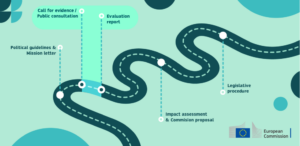
On 7 March, the European Commission has concluded its public consultation on the evaluation of Directives 2014/23/EU (the Concessions Directive), 2014/24/EU (the Public Procurement Directive), and 2014/25/EU (the Utilities Directive). During the 12 weeks of consultation open in the Have your Say portal, stakeholders had the opportunity to share their experiences and provide feedback on the legislation under evaluation.
The exercise attracted 949 replies to the call for evidence and 733 responses to the open public consultation.
The consultation received responses from a wide range of stakeholders, with the highest participation from public authorities (call for evidence: 196, open public consultation: 199), followed by EU citizens (168) in the call for evidence and businesses (150) in the open public consultation.
Moreover, the initiatives achieved broad geographical coverage, with contributions from stakeholders across 36 countries, with the highest participation from Germany (call for evidence: 141, open public consultation: 193), Belgium (call for evidence: 132, open public consultation: 102), and Sweden in the call for evidence (85) and France in the open public consultation (75). This diversity ensures that the evaluation captures a comprehensive range of perspectives on the functioning of the current public procurement framework.
What’s next?
The Commission is now analysing the feedback received, alongside ongoing input from expert groups and targeted consultations. The findings from these initiatives will inform the next stages of process, including the preparation of an impact assessment.
A ‘factual summary report’ summarising the key elements of the public consultation will be published within 8 weeks of the closure of the public consultation, along with the contributions to the public consultation on the ‘Have your say’ web portal.
Updates on the evaluation’s progress will be available on the Commission’s website, and stakeholders are encouraged to stay informed through official channels.
Source: EU Commission website (https://public-buyers-community.ec.europa.eu/news/european-commission-concludes-public-consultation-evaluation-public-procurement-directives and https://ec.europa.eu/newsroom/growth/newsletter-archives/62260)
14.03.2025
Greener IT procurement: How Brussels is making a difference
Two and a half years ago, a small batch of remanufactured laptops arrived at the Port of Brussels after a six-week journey by boat from Saudi Arabia. This experiment, run by Paradigm Brussels, tested ways to reduce transport emissions in IT procurement. By replacing air and road transport with maritime shipping and cargo bikes, emissions were cut by 74%, though at the cost of a longer delivery time and a minor additional expense.
Embedding sustainability in procurement
Paradigm Brussels, the central IT purchasing body for the Brussels Region, has been refining its public procurement criteria to make IT purchases more sustainable. Beyond transport, its tenders now include sustainability clauses covering manufacturing, usage, and end-of-life impact.
One major shift was increasing the weight of sustainability criteria in procurement decisions. “Previously, they accounted for just 1-3% of the total score—too little to influence bids” explains Constance Mathieu, Sustainable IT Advisor at Paradigm Brussels. The new 10% weighting has already made an impact, and there are calls to raise it further.
Energy efficiency is another focus. “The best way to encourage lower energy consumption is to integrate it into the total cost calculation” says Mathieu. This ensures energy-efficient devices score higher in the procurement process.
Prioritising durability and repairability
Paradigm aims to extend laptop lifespans from four to six years by prioritising repairability. New tender criteria require suppliers to provide a cost breakdown of spare parts and meet the Ingress Protection (IP) rating standard, which measures resistance to water and dust. If a device is difficult to repair or spare parts are too expensive, it’s less likely to be fixed, explains Thierry Chappe, Sustainable IT Manager at Paradigm.
Balancing ambition with practicality
Applying sustainability principles in procurement isn’t always straightforward. “Generic recommendations don’t translate easily into tenders” says Mathieu. “If we ask bidders for quality management measures, we get 500-page reports that are impossible to compare.” Instead, Paradigm relies on quantifiable criteria and closed questions to ensure fair and transparent evaluations.
Beyond procurement criteria, a cultural shift is needed. “We must move away from a cost-first mindset while reassuring teams they’ll still get high-quality equipment” says Chappe. Dialogue with suppliers also plays a role, signalling that sustainability matters and will influence tender evaluations.
Sharing lessons and strengthening collaboration
Paradigm is updating its procurement guide to provide clear, legally sound wording that smaller administrations can adopt. Monitoring contract implementation is also key, ensuring sustainability commitments are upheld over the five-year contract period.
“If people don’t understand the reasoning behind procurement decisions, they may find ways around them” warns Mathieu. That is why Paradigm is prioritising awareness-raising alongside procurement reforms—ensuring sustainability is not just a requirement on paper but a shift in practice.
About Paradigm Brussels and Big Buyers Working Together
The interview was conducted by Wilma Dragonetti, Eurocities Writer at Eurocities with Thierry Chappe, Sustainable IT Manager at Paradigm Brussels and Costance Mathieu Sustainable IT Advisor at Paradigm Brussels.
Paradigm Brussels is a member of the Big Buyers Working Together (BBWT) Community of Practice on Sustainability in ICT.
Big Buyers Working Together, is an EU-funded project that fosters collaboration between public buyers to enhance sustainable procurement practices.
Join Big Buyers Working Together and the Community of Practice on Sustainability in ICT.
Source: EU Commission website (https://public-buyers-community.ec.europa.eu/communities/sustainability-ict-digital/news/greener-it-procurement-how-brussels-making-difference and https://ec.europa.eu/newsroom/growth/newsletter-archives/62260)
13.03.2025
EU Ecolabel webinar recording: Caring for you, caring for the environment: the EU Ecolabel for absorbent hygiene products

Description
Missed the “Caring for you, caring for the environment: the EU Ecolabel for absorbent hygiene products” webinar?
Don’t worry—the recording is now available! Discover how the EU Ecolabel is transforming the absorbent hygiene products market by fostering trust, transparency, and sustainability. Hear from industry experts, including Sylvie Ludain from the European Commission, Miriam Thiemann from BEUC, and representatives from Amazon, EDANA, Love & Green, and Drylock Technologies, as they explore the growing impact of the EU Ecolabel on consumer behavior and business competitiveness.
Watch the recording now to learn more!
13.03.2025
Building collaboration in public procurement of innovation (PPI)
Collaboration is essential for the success of Public Procurement of Innovation (PPI). Engaging with innovation agents, fostering the association of different ecosystems and implementing strategic governance models can significantly improve outcomes.
Find in this insight some recommendations to promote participation and strengthen collaboration in PPI!
Collaboration is key to successful PPI. Insight No 8 offers practical recommendations to boost participation and strengthen partnerships for better outcomes.
Source: EU Commission website (https://public-buyers-community.ec.europa.eu/communities/procure-innovation-eu/resources/insight-no-8-how-build-collaboration-fostering-ppi and https://ec.europa.eu/newsroom/growth/newsletter-archives/62260)
13.2.2025
Position Paper on the revision of Public Procurement Directives
“Public procurement accounts for a staggering 14% of the EU’s GDP. With this immense purchasing power comes a unique opportunity to combat the exploitation of workers and the environment in global supply chains. As the EU revises its Public Procurement Directive, now is the time to embed stronger sustainability requirements. Swedwatch’s latest position paper outlines five key recommendations on how public procurement can drive positive change, and be integrated into the directive revision.
The EU Public Procurement Directive, reformed in 2014, encourages greater consideration of environmental, social, and innovative aspects. However, the approach remains voluntary, and the share of procedures using award criteria beyond price is still limited. According to Swedwatch, this is one of the key issues that must be addressed in the revised directive.
“A key recommendation, as outlined in our position paper, is to clarify legal provisions and ensure the integration of mandatory sustainability requirements across all public procurement processes,” says Sofia Käll, Program Officer at Swedwatch, and the organisation´s representative in the European Commission’s Stakeholder Expert Group on Public Procurement (SEGPP) where Swedwatch recently secured a place.
A mandatory approach would also strengthen public procurement’s role in upholding human rights and protecting the environment, aligning with internationally recognised frameworks for responsible business conduct, such as the UN Guiding Principles on Business and Human Rights (UNGPs). From a business perspective, this would create a level playing field, preventing responsible bidders from being undercut by competitors who compromise on labor and environmental standards.
Along the same lines, and inspired by the Corporate Sustainability Due Diligence Directive (CSDDD), the revision of the Public Procurement Directive presents a unique opportunity to establish human rights and environmental due diligence as an award criterion for tenderers. It is however crucial that such due diligence processes prioritise meaningful stakeholder engagement—especially with affected workers and communities—rather than relying exclusively on social audits, which research has shown to be neither sustainable nor effective.
Additionally, Swedwatch calls for an obligation for contractors in the EU market to disclose data on their operations, subsidiaries, and business partners, as companies often withhold critical supply chain data, making it difficult for procurers to exclude non-compliant suppliers without concrete evidence of violations.
A final but equally crucial recommendation is to recognize public procurers as key agents of change for sustainability by facilitating capacity-building and providing additional resources for procurement officials across EU Member States.
“Efforts to raise awareness and build knowledge among contracting authorities — such as effective monitoring of supplier compliance and incorporating sustainability criteria — are just as essential as addressing legislative shortcomings,” says Sofia Käll.
Key recommendations for EU public procurement legislation
1️⃣Align legislation with internationally recognised frameworks for responsible business conduct.
2️⃣Make sustainability requirements legally sound and mandatory.
3️⃣Require human rights and environmental due diligence as a minimum.
4️⃣Increase transparency around contractors’ supply chain and sustainability performance.
5️⃣Recognise public procurers as change agents for sustainability”.
Source Swedwatch: https://swedwatch.org/themes/unlocking-the-power-of-public-procurement/
21.1.2025
The Future of Public Procurement: Deploying the new Public Procurement Data Space (PPDS)
On 24 September 2024, the much-anticipated Public Procurement Data Space (PPDS) was officially launched, delivering on the Commission’s political commitment to develop a common European data space for public administrations in EU.
Characterised as a high-priority domain in the European Strategy for Data, the EU public procurement governance framework is clearly advancing further into digitalisation, aiming to enhance transparency and reinforce accountability in public spending, as well as to effective policymaking.
In this blog post we summarise the benefits of the PPDS, the steps of its progressive deployment as well as some potential concerns accompanying its voluntary character with regard to public contracts that are not subject to the EU public procurement rules.
As part of EIPA’s series on ‘The Future of Public Procurement’, this blog post aims to make a brief analysis of the new PPDS, a powerful digital tool intended to unleash public procurement’s full potential.
Major benefits of PPDS
The PPDS will serve as a new, multipurpose digital tool supporting the European strategy for data by making national public procurement data easily accessible to all interested stakeholders – including public buyers, policymakers, businesses, taxpayers, and civil society – through the use of state-of-the-art and emerging analytics technologies.
According to the Commission Communication on the PPDS, the advent of this data space
… will revolutionise the access to and use of public procurement data:
- It will create a platform at EU level to access for the first time public procurement data scattered so far at EU, national and regional level.
- It will considerably improve data quality, availability and completeness, through close cooperation between the Commission and Member States and the introduction of the new eForms, which will allow public buyers to provide information in a more structured way.
- This wealth of data will be combined with an analytics toolset including advanced technologies such as Artificial Intelligence (AI), for example in the form of Machine Learning (ML) and Natural Language Processing (NLP).
Intending to implement a digital transition to a fully integrated system for capturing and mining public procurement data at all levels – EU, national, regional, and local – the PPDS will establish a single platform to accumulate procurement data from across the EU. This includes data on public contracts exceeding the Public Procurement Directives threshold, which must be published via TED, as well as contracts below the threshold, whose publication depends on domestic laws of the Member States.
So far, national public procurement data has been fragmented for several reasons such as the format variations of the digital platforms used in each Member State, the domestic differentiations concerning the publication of procurement data, different administrative organisation of each Member State.
According to the Commission Communication on the PPDS (…) data from only 20% of all calls for tenders as submitted by public buyers is available and searchable for analysis in one place. The remaining 80% are spread, in different formats, at national or regional/local level and difficult or impossible to re-use for policy, transparency, and better spending purposes. In other words, public procurement is rich in data, but poor in making it work for taxpayers, policy makers and public buyers.
Therefore, the key innovation of the PPDS lies in making data from all public procurement procedures – both those subject to and exempt from EU rules – accessible through a central, unified EU platform that will cover all levels of governance: EU, national, regional, and local. Capturing and structuring domestic data will lead to unlocking public procurement’s full potential to shape and implement strategic policies while ensuring transparency, accountability, and the effectiveness of public spending.
PPDS’s multi-staged deployment
As announced in the Commission Communication, the PPDS is to be achieved progressively as its deployment will involve several phases, fostering Member States’ voluntary participation. Briefly, the Commission will follow a multi-staged approach for interconnecting the national databases with the EU single data platform:
(a) It will set up the basic architecture of the PPDS and a minimum data analytics toolset.
(b) It will elaborate the data governance framework for the PPDS in cooperation with the Member States that are willing to join the PPDS.
(c) It will support the connection of the national publication portals to the PPDS.
(d) It will develop the data analytics toolset and integrate mechanisms such as AI and others to help identifying patterns and monitoring policies such as the Green Deal, and innovative or social procurement. Additionally, it will integrate historical data from TED and if possible, from national portals to be able to identify trends over the last decade and predict better future trends.
(e) It will further extend the scope of the data available for analysis within the PPDS, aiming to eventually cover the entire procurement cycle, from the pre-award to the post-award phase.
Potential challenges in realising the full potential of the PPDS
The planned interconnection between European databases, including TED data on public procurement and national procurement datasets, will be implemented on a voluntary basis. This approach may pose challenges to fully unlocking the PPDS’s potential, as varying levels of Member State participation could lead to some degree of data fragmentation.
According to the Commission Communication, each Member State is responsible for digitising its public procurement systems and linking its data sources to the PPDS (beyond what is already mandated for publication on TED under the Public Procurement Directives), while independently covering the associated costs. This division of responsibilities reflects the EU’s limited authority in interadministrative cooperation, raising the potential risk that not all PPDS participants will equally contribute data, leading to disparities in data availability between Member States [1]. Such uneven participation could limit the effectiveness of the PPDS unless Member States fully commit to implementing eForms – including for public contracts below the threshold of the Public Procurement Directive – and take a collaborative approach to building the platform.
Furthermore, since the PPDS will initially only include new data and gradually incorporate historical records, building a solid database will take time, especially if Member State participation is limited. The extraction and aggregation of large-scale procurement data from across the EU can only effectively inform strategic EU policymaking when the data is complete, comprehensive, and contributed by all Member States [2].
Conclusion
To conclude, public procurement data has remained underutilised due to issues related to data quality, lack of interoperability, and administrative fragmentation. As outlined in the EU Strategy for Data, the PPDS will unlock this potential by creating a single EU platform to accumulate data from both procurement procedures subject to and those exempt from EU rules. The PPDS’s significant benefits will surely reshape the public procurement landscape by greatly enhancing the accessibility, transparency, and accountability of public spending.
However, achieving a fully integrated space for public procurement data requires collaborative efforts at the EU, national, and regional/local public buyer levels across the Union. The functionality of the PPDS will largely depend on Member States taking an ambitious approach to implementing eForms, including the voluntary publication of data on public contracts below the Directive threshold – or potentially reforming their domestic laws to mandate the sharing of such data with the PPDS.
It will be crucial to monitor how effectively this ambitious digital tool is implemented and whether it delivers on its promise to fully unlock the value of EU public procurement data.
As part of EIPA’s commitment to supporting the effective use of digital tools in public procurement, we will soon be launching a seminar addressing digital solutions for enhancing transparency and combating corruption in public procurement. Further details on this initiative will be shared shortly.
Source: European Institute of public administration (Authors: Gracia Vara Arribas and Anastasios Papadopoulos)
14.1.2025
International Procurement Instrument (IPI) – Commission to assess next steps for tackling discrimination in China’s public procurement market for medical devices
A report published today, highlighting continued discrimination against EU medical devices in China’s public procurement market, will inform the Commission’s assessment on what measures should be taken to restore the EU-China level playing field in this area.
The report, which outlines the main findings of the first investigation under the EU’s International Procurement Instrument (IPI), presents clear evidence of China limiting the access of EU medical devices producers to its government contracts in an unfair and discriminatory way.
The EU remains committed to engaging China in a constructive dialogue aimed at addressing and eliminating the discriminatory measures. However, in the absence of an acceptable solution, the Commission will now carefully assess the possibility of adopting IPI measures. If it finds that such measures are in the EU interest, they could include a restriction on, or exclusion of, Chinese bidders of government contracts in the EU.
Background
The Commission Report published today concludes that China has put in place several different forms of direct and indirect discrimination against EU medical devices and suppliers, resulting in a serious and recurrent impairment of their access to this market across the entire territory of China. This discrimination affects all medical devices categories.
The EU public procurement market is one of the largest and most accessible in the world. Moreover, Chinese exports of medical devices towards the EU experienced a surge of more than 100% between 2015 and 2023, demonstrating the overall openness of the EU market.
The International Procurement Instrument entered into force on 29 August 2022. The tool is designed to restore the balance of opportunities for EU companies tendering outside the EU, and promote open and fair access to public procurement markets around the world. Its main goal is to encourage the reciprocal opening of public procurement markets to EU economic operators and EU supplies.
The Commission launched its first investigation under the Regulation in response to measures and practices in the Chinese procurement market for medical devices on 24 April 2024.
Any measure adopted under the IPI has to be specific and based on the principles of proportionality and efficiency, while considering any possible supply issues.
For More Information
IPI Report on Chinese procurement market for medical devices
Citazioni
The European Commission strongly wishes to maintain open, fair and mutually beneficial trade relations with China, including on public procurement. However, openness needs to be reciprocal: government contracts in the EU are open to non-EU countries, and we expect other countries to treat our companies with similar fairness. We have found that China is discriminating against EU medical devices producers in bids for public contracts, and while we continue to prioritise dialogue as a first step to finding solutions, we stand ready to take decisive action to defend the level playing field, and support fair competition.
Source: EU Commission website
REPORT FROM THE COMMISSION pursuant to Article 5(4) of Regulation (EU) 2022/1031 on the investigation under the International Procurement Instrument concerning measures and practices of the People’s Republic of China in the public procurement market for medical devices
- Document type
- Report
- Reference
- COM(2025)5
- Date
- 14/01/2025
- Responsible service
- Directorate-General for Trade
- Source: https://ec.europa.eu/transparency/documents-register/detail?ref=COM(2025)5&lang=en
Factual findings of the IPI investigation on the procurement market for medical devices in the People’s Republic of China Accompanying the document REPORT FROM THE COMMISSION pursuant to Article 5(4) of Regulation (EU) 2022/1031 on the investigation under the International Procurement Instrument concerning measures and practices of the People’s Republic of China in the public procurement market for medical devices
- Document type
- Staff working document
- Reference
- SWD(2025)2
- Date
- 14/01/2025
- Responsible service
- Directorate-General for Trade
- Download document
Source: https://ec.europa.eu/transparency/documents-register/detail?ref=SWD(2025)2&lang=en
29.10.2024
Consultation on possible updates to the EU procurement directives
“As announced in the Political guidelines for the next term 2024-2029, the European Commission is set to launch a comprehensive evaluation of the Public Procurement Directives. This is in line with the requests of the European Court of Auditors (ECA) and the Council to carry out an in-depth analysis of the public procurement legal framework.
Conducting the evaluation, the European Commission will look at several topics identified, such as the level of competition in the EU public procurement market, the simplification of the current mechanisms and the achievement of strategic objectives.
The European Commission will publish the call for evidence and public consultation here. We count on public buyers, businesses, trade unions and civil society to contribute to the process.
To follow all developments relating to the upcoming evaluation of the legislative framework, subscribe to our Newsletter and become of Member of our Public Buyers Community”.
Source: https://public-buyers-community.ec.europa.eu/news/evaluation-public-procurement-directives
23.10.2024
UNCITRAL Colloquium on the Law of International Trade for a Greener Future – Potential updates to the UNCITRAL Model Law on Public Procurement to include “Green Procurement”
https://uncitral.un.org/en/climatechangecolloquium2024
Recordings and PPT slides: https://uncitral.un.org/en/ColloquiumCC2024OCT
https://papers.ssrn.com/sol3/papers.cfm?abstract_id=4293959
26.09.2024
“Bribery in the Conduct of Business, Addressing Corruption in Public Procurement, and Laundering and Recovery of Proceeds of Crime: A Study on the Main Areas for Enhanced Cooperation among IPEF Partners” – Report on IPEF Member States’ Anti-Corruption Practices
https://www.unodc.org/roseap/uploads/documents/Publications/2024/IPEF_study.pdf
24.09.2024
Public Procurement Data Space (PPDS)
The Public Procurement Data Space (PPDS) is a service where policy makers, public buyers, companies, and other stakeholders can access public procurement information in an innovative and transparent way, unprecedented at the European level. The PPDS will contribute to developing a more competitive, fairer, and greener Europe.
What is the PPDS ?
The Public Procurement Data Space (PPDS) overcomes this information gap by connecting European databases – including TED – with national procurement data sets available on national portals.
Every year in the EU, over 250 000 public authorities spend around €2.5 trillion (around 15 % of GDP) on the purchase of services, works and supplies. EU directives govern procurement contracts above certain thresholds to ensure the transparency of the procedures. Notices of such contracts must be published on the European Tenders Electronic Daily (TED) portal.
Until recently, notices of contracts below the EU thresholds were spread across the national or regional level in different formats, making it difficult, or even impossible, to re-use the wealth of data already existing.
The Commission underlined the need to unlock this wealth of EU public procurement data in the European strategy for data, published in February 2020.
The concrete implementation of the PPDS is further explained in the Commission communication published on 16 March in 2023.
Harnessing the power of public procurement data
The PPDS is at the core of the digital transformation of public procurement in the EU.
Public procurement data helps to
- facilitate access for companies and SMEs to public procurement procedures across the EU
- increase transparency, integrity and accountability of public spending, fighting corruption and collusion
- get better value for money through data-driven benchmarking, planning and purchasing
- help recovery from the pandemic by monitoring the use of EU funds
- target public funds towards policy priorities, ensuring wider uptake of social and sustainable procurement
- ensure access for companies and SMEs to public procurement procedures across the EU and foster competition
- decrease red tape through easier reporting for EU countries
- generate key insights for policy-making
The signature of the European Declaration on Digital Rights and Principles reflects our shared goal of a digital transformation that puts people first. The rights put forward in our Declaration are guaranteed for everybody in the EU, online as they are offline. And the digital principles enshrined in the Declaration will guide us in our work on all new initiatives.
Key moments of the PPDS
-
19 February 2020Publication of a European Strategy for Data
Communication from the Commission to the European Parliament, the Council, the European Economic and Social Committee and the Committee of the Regions the creation of the European Strategy for Data.
-
16 March 2023PPDS communication
Communication from the Commission Public Procurement: A data space to improve public spending, boost data-driven policymaking and improve access to tenders for SMEs.
-
July 2023Launch of the PPDS restricted portal
Launch of the Public Procurement Data Space pilot portal with a restrict group of EU Member States.
-
24 September 2024PPDS Day – The Grand Opening
The European Commission hosts a full-day event to celebrate the go live of the Public Procurement Data Space.
More information regarding the PPDS Day 2024 available in the following link.
Who is the PPDS for?
The PPDS portal addresses the concerns and needs of a diverse group of stakeholders.
Policy makers (EU and at national level) use the PPDS to analyse patterns and the performance of public procurement markets. In return, this wealth of information allows evidence-based policymaking as well as the capacity to predict future trends.

Public buyers in Member States gain increased capabilities through real-time information, allowing for benchmarking, knowledge sharing, and data driven decision making.

Companies, and SMEs in particular, benefit from an easy-to-use portal that gives them access to more tenders, along with detailed market analysis possibilities.

Auditing bodies in Member States and in the EU, benefit form a new tool to facilitate reporting and to identify fraud, collusion, or misuse of public funds.

Service providers create value based on public procurement data. They are now able create applications, link additional data, or enable capabilities for other actors to consume public procurement information.

NGOs, researchers, and journalists are able to use PPDS data for research and investigation purposes.

Citizens benefit from enhanced access to information and transparency regarding public spending by public administrations in Europe.
Who can use the PPDS?
The platform is intended for those users who are interested in:
- Consulting information regarding relevant indicators. As mentioned, the PPDS provides Data Analytics Dashboards that facilitate exploring specific areas of public procurement, focusing on different areas of interest.
- Visualise, and derive insights from data that can clearly describe the performance of the public procurement process in areas such as competition, transparency, market access and strategic procurement
Resources
More information is included in the resources page.
Source: https://www.public-procurement-data-space.europa.eu/en
https://eproc.pages.code.europa.eu/ppds/pages/
12.09.2024
International Conference Next Generation Procurement Rome, September 12-13, 2024
9.9.2024
The future of European competitiveness: Report by Mario Draghi

“For instance, we are still not joining forces in the defence industry to help our companies to integrate and reach scale. European collaborative procurement accounted for less than a fifth of spending on defence equipment procurement in 2022. We also do not favour competitive European defence companies. Between mid-2022 and mid-2023, 78% of total procurement spending went to non-EU suppliers, out of which 63% went to the US. Likewise, we do not collaborate enough on innovation, even though public investments in breakthrough technologies require large capital pools and the spillovers for everyone are substantial. The public sector in the EU spends about as much on R&I as the US as a share of GDP, but just one-tenth of this spending takes place at the EU level.
(…)
At the same time, there are other public goods identified in this report – such as defence procurement or crossborder grids – that will be undersupplied without common action. If the political and institutional conditions are met, these projects would also call for common funding.
(…)
the EU should legislate mandatory standards for public sector procurement, thereby levelling the playing field for EU companies against larger non-EU players. Outside of “sovereign” market segments, it is recommended to negotiate a low barrier “digital transatlantic marketplace”, guaranteeing supply chain security and trade opportunities for EU and US tech companies on fair and equal conditions. To make these opportunities equally attractive beyond large tech companies, SMEs on both sides of the Atlantic should benefit from the same easing of regulatory burdens for small companies that is proposed above.
(…)
The report recommends reinforcing joint procurement – at least for LNG – to leverage Europe’s market power and establishing long-term partnerships with reliable and diversified trade partners as part of a genuine EU gas strategy.
(…)
To capitalise on the decarbonisation push, Europe should refocus its support for clean tech manufacturing, focusing on technologies where it either has a lead or where there is a strategic case for developing domestic capacity
(…)
At the national level, to ensure predictable demand for the EU clean tech industry and to offset trade distorting policies abroad, the report recommends introducing an explicit minimum quota for the local production of selected products and components in public procurement and in CfD auctions and other forms of local production offtake. This quota should be combined with criteria established at EU level for orienting local production to the most innovative and sustainable solutions. The approach could be supported by the creation of joint ventures or cooperation agreements for knowledge transfer and sharing between EU and non-EU companies. For “infant industries”, it is recommended that Member States plan upcoming auctions and public procurement procedures to act as a “launch customer” for new technologies.
(…)
To reduce its vulnerabilities, the EU needs to develop a genuine “foreign economic policy” based on securing critical resources [see the chapter on critical raw materials]. In the short term, the EU needs to implement the Critical Raw Materials Act (CRMA) rapidly and fully. The report recommends complementing this Act with a comprehensive strategy covering all stages of the critical mineral supply chain, from extraction to processing to recycling. To strengthen Europe’s position at the procurement stage, it is proposed to create a dedicated EU Critical Raw Material Platform. The platform would leverage Europe’s market power by aggregating demand for the joint purchasing of critical materials (following the model used in South Korea and Japan) and coordinating the negotiation of joint purchases with producer countries.
(…)
For both defence and space industries, insufficient aggregation and coordination of public spending in Europe compounds industrial fragmentation. European collaborative procurement accounted for only 18% of expenditure on defence equipment procurement in 2022, well below the benchmark of 35% agreed upon in the European Defence Agency frameworks. This lack of coordination creates a vicious circle for the EU defence industry. Without demand aggregation among Member States, it is more difficult for the industry to predict longer-term needs and increase supply, in turn decreasing its overall capacity to meet demand and depriving the industry of orders and opportunities. As a result, defence procurement is diverted outside of the EU. Between June 2022 and June 2023, 78% of procurement spending went to non-EU suppliers, out of which 63% went to the US. At the same time, when EU Member States organise and cooperate, the results are positive. One such example is the A330 Multi-Role Tanker Transport, which was developed through a collaborative project allowing participating countries to pool resources and share operation and maintenance costs. The European space sector is likewise hindered by insufficient demand aggregation and investment coordination among Member States. Furthermore, the European Space Agency (ESA) operates based on the principle of “geographical return”, meaning that it invests in each of its member countries through industrial contracts for space programmes an amount which is similar to the country’s financial contribution to the agency. This principle leads to an inevitable fragmentation of supply chains, the unnecessary duplication of capacities in relatively small markets and a mismatch between the most competitive industrial actors and the actual allocation of resources.
(…)
In the absence of common European spending, policy actions for the defence sector need to focus on aggregating demand and integrating industrial defence assets [see the chapter on defence]. In the short term, the swift implementation of the European Defence Industrial Strategy and the related European Defence Industry Programme is needed. In particular, it is essential to increase substantially the aggregation of demand between groups of Member States, at least among those who opt to do so, and to raise the share of joint defence procurement. The report recommends further steps to develop a medium-term EU Defence Industrial Policy which can support the structural cross-border integration of defence assets and the selective integration and consolidation of EU industrial capacity, with the explicit aim of increasing scale, standardisation and interoperability. EU competition policy should enable such consolidation when increased scale would deliver efficiencies or allow the realisation of globally competitive investments. In addition, as EU defence spending rises, defence industrial consolidation, integration and technological innovation should be supported by reinforced European preference principles in procurement, ensuring that a minimum share of this rising demand is concentrated on European companies rather than flowing overseas.
(…)
The European space sector would benefit from updated governance and investment rules, and greater coordination of public spending in a true Single Market for space. The report recommends progressively removing the ESA’s geographical return principle. The ESA’s procurement rules should reflect the outcome of industrial competition and the choice of the best providers, and resources should be concentrated on projects that demonstrate the potential for significant scientific or technological advancement, regardless of the location of the participating entities. This process should be accompanied by the establishment of a functioning Single Market for space, with common standards and the harmonisation of licensing requirements (in line with the planned EU Space Law). It is also proposed to establish a multi-purpose Space Industrial Fund that would allow the European Commission to act as an “anchor customer” to jointly purchase space services and products and fund critical technologies, helping the EU industrial base to increase its capacity. Similarly, joint strategic priorities for space research and innovation should be supported by increased coordination, funding and the pooling of resources for the development of new large EU joint programmes. Finally, as for the defence sector, the growth of innovative EU space SMEs, start-ups and scale-ups should be enabled by improved access to finance and the introduction of targeted European preference rules.
(…)
Some joint funding of investment at the EU level is necessary to maximise productivity growth, as well as to finance other European public goods. The more that governments implement the strategy laid out in this report, the greater the increase in productivity will be, and the easier it will be for governments to bear the fiscal costs of supporting private investment and of investing themselves. Joint funding for specific projects will be key to maximise the productivity gains of the strategy, such as investing in breakthrough research and infrastructures to embed AI into the economy. At the same time, there are other public goods identified in this report – such as investing in grids and interconnectors, and financing the joint procurement of defence equipment and defence R&I – that will be undersupplied without common action and funding. Finally, for Member States to converge more closely in their policies – be it the Single Market or more generally in the policies described in this report such as climate, innovation, defence, space and education – both regulation and incentives will be required. Incentives will also require common funding. However, if the strategy is not fully implemented and productivity growth does not pick up, a broader issuance of public debt may be needed to make the funding of the transitions a more realistic proposition.
(…)
Finally, the EU should move towards regular issuance of common safe assets to enable joint investment projects among Member States and to help integrate capital markets. If the political and institutional conditions are in place as outlined above, the EU should continue – building on the model of NGEU – to issue common debt instruments, which would be used to finance joint investment projects that will increase the EU’s competitiveness and security. As several of these projects are longer-term in nature, such as financing R&I and defence procurement, common issuance should over time produce a deeper and more liquid market in EU bonds, allowing this market to progressively support the integration of Europe’s capital markets. At the same time, together with the above reforms, to finance a variety of programmes focused on innovation and on raising productivity, Member States could consider increasing the resources available to the Commission by deferring the repayment of NGEU”.
11.07.2024
‘Interplay between the Deforestation Regulation (EUDR) and Public Procurement in the EU’ – European Procurement & Public Private Partnership Law Review
https://sapiensnetwork.eu/towards-deforestation-free-public-procurement-new-publication/
10.07.2024
‘Empowering Small Businesses: The Impact of Reserved Contracts in U.S. Federal Procurement’ – SAPIENS Working Paper July/2024
09.07.2024
Moldova signs the EU’s Joint Procurement Agreement to deepen health cooperation with the EU
Today, Moldova became the 38th country to sign the Joint Procurement Agreement in the area of health, during an official visit to Chisinau by Commissioner for health and food safety, Stella Kyriakides. Moldova is now the 6th EU candidate country to become part of the Agreement.
The Joint Procurement Agreement is a legal and operational mechanism which enables participating countries to join forces in the face of a serious health threat and to jointly purchase essential supplies, such as medicines and medical equipment. For example, during the COVID-19 pandemic, it allowed participating countries to acquire personal protective equipment, needles and syringes for COVID-19 vaccination, ventilators and medicines under equal conditions.
Participation in the Joint Procurement Agreement allows a country to benefit from the combined purchasing power of EU Member States and participating countries, enabling improved access and greater security of supply for medical countermeasures in a health emergencythrough pooling needs and creating economies of scale. The Joint Procurement Agreement also improves participating countries’ preparedness for serious cross-border diseases, by having contracts for essential medical countermeasures in place before major outbreaks occur.
Most recently, the Commission signed a joint procurement framework contract to supply up to 665,000 doses of the zoonotic influenza (avian flu) vaccine from Seqirus, with an option for an additional 40 million doses. This contract, aimed at preventing avian flu, ensures that participating countries have access to medical countermeasures if needed.
The Commission – via its Health Emergency Preparedness and Response Authority (HERA) – manages the procurement procedures under the Joint Procurement Agreement in close collaboration with the participating countries. These countries can then purchase the contracted products as needed, using their national budgets.
For More Information
2014 Joint Procurement Agreement Decision
JPA : participating countries
01.07.2024
Keynote speech by Executive Vice-President Šefčovič at the Jacques Delors Agora event
“In the EU, we spend something like 2 trillion euros a year through public procurement.
But we still put an overwhelming emphasis on price.
We want our companies to have a sustainable approach, lowering their carbon footprint while treating their employees well, with the fair wages they deserve.
And I think we should reward those companies by including such factors in public procurement”.
https://ec.europa.eu/commission/presscorner/detail/en/speech_24_3585
23.06.2024
Sustainable Public Procurement – SAPIENS Policy Brief
20.06.2024
https://ec.europa.eu/commission/presscorner/detail/en/ip_24_3683
Commission launches new public procurement portal
The new tool serves as a public procurement knowledge hub, with easy-to-access information on the rules governing public procurement for contracting entities in the EU Member States.
DG Trade has expanded the online Access2Markets portal with a new public procurement tool, ‘Procurement for Buyers‘, which will serve as a portal for public procurement entities in EU Member States, helping them to understand and apply international procurement rules in a clear and consistent manner.
This new initiative expands the existing public procurement section of Access2Markets, which already features the ‘Procurement for Suppliers’ tool.
‘Procurement for Suppliers’ helps European companies to find out whether they are eligible to bid for procurement contracts in third countries on an equal footing with local companies. It is currently available for Canada, Japan and the United States, with further trading partners to be added in the future.
13.05.2024
Statement by Commissioner Breton on withdrawal of LONGi Solar Technologie GmbH and Shanghai Electric from public procurement following the Commission’s opening of an investigation under the Foreign Subsidies Regulation
The Commission takes note of the withdrawal of two companies for a public procurement procedure concerning the construction of a photovoltaic park in Romania. The two companies involved are ENEVO, which includes LONGi Solar Technologie GmbH, as well as Shanghai Electric UK Co. Ltd. and Shanghai Electric Hong Kong International Engineering Co. Ltd.
The withdrawal follows the European Commission’s announcement on 3 April 2024 that it would open an in-depth investigation under the Foreign Subsidies Regulation . As a result of the withdrawal, the Commission will close its in-depth investigation.
These investigations concern a procedure carried out by a Romanian contracting authority (Societatea PARC FOTOVOLTAIC ROVINARI EST S.A.) for the design, construction and operation of a photovoltaic park in Romania with a capacity of 454.97 MW, partly financed by the European Union. The estimated value of this contract is around €375 million.
The first consortium consists of ENEVO Group and LONGi Solar Technologie GmbH. ENEVO Group, the consortium leader, is a Romanian-based engineering and consulting services provider. LONGi Solar Technologie GmbH is a German subsidiary wholly owned and controlled by LONGi Green Energy Technology Co, Ltd, a leading photovoltaic company listed on the Hong Kong Stock Exchange.
The second consortium consists of Shanghai Electric UK Co. Ltd. and Shanghai Electric Hong Kong International Engineering Co. Ltd. Both companies are wholly owned and controlled by Shanghai Electric Group Co. Ltd, a Chinese state-owned enterprise specialising in multinational power generation and electrical equipment manufacturing.

Solar power is vital for Europe’s economic security. We are massively investing in the installation of solar panels to decrease our carbon emissions and energy bills – but this should not come at the expense of our energy security, our industrial competitiveness and European jobs. The Foreign Subsidies Regulation is ensuring that foreign companies which participate in the European economy do so by abiding to our rules on fair competition and transparency.
https://ec.europa.eu/commission/presscorner/detail/en/statement_24_2570
26.04.2024
Foreign Subsidies Regulation (‘FSR’) – EU Competition Day: competition and competitiveness in uncertain geopolitical times – Speech by EVP
“The Digital Markets Act and the Foreign Subsidies Regulation were designed to protect fair competition within the Single Market. They address two novel risks.
(…)
Another new tool is the Foreign Subsidies Regulation – which I know is a hot topic!
With the Foreign Subsidies Regulation, we address another dimension. We address an external challenge to our competitiveness and resilience. Activities or acquisitions in Europe infused by distortive subsidies impair our markets’ competitiveness. They destroy the level playing field. And they weaken our economic security.
We are committed to an open Single Market. But business in the European Union must be based on fair competition, reciprocity and a level playing field. I think that the events of the last weeks have shown that we will defend those principles vigorously.
We have launched a series of investigations, in quick succession. We already closed our investigation into the Chinese train manufacturer CRRC after it withdrew from a Bulgarian public procurement procedure in Bulgaria. But we continue to investigate bids by Chinese companies in public procurement for solar parcs in Romania. Now, we are also investigating subsidies in wind energy projects in the EU. And a couple of days ago we carried out the first surprise inspections under the Foreign Subsidies Regulation in the security equipment sector in several Member States.
I think we have made it clear that we will protect the Single Market. We will tackle distortive subsidies from wherever in the world they arise. But we will only act on the basis of clear evidence and in full respect of our international engagements and commitments.
We are very focused on enforcement measures. But I would also recognize the positive attitude that we see from companies and stakeholders. These new tools do foster compliance. And compliance directly achieves the goals that we have set for ourselves.
- The DMA entered into force after months of engagement with gatekeepers. Many important announcements have been made that already bring concrete and tangible benefits. Today, your phone allows you to do things that you could not do yesterday. It is easier to get rid of apps you don’t want, to choose your preferred default setting. You also have better control over your data. All of that is new.
- For the Foreign Subsidies Regulation, I will admit that it brought us a bit more notifications than we initially expected. But our practice shows that this is not a tool to discourage investment in the EU. Investors initially feared that we would create too much red tape. But companies that have gone through the notification system have found a very swift and clear outcome”.
https://ec.europa.eu/commission/presscorner/detail/en/speech_24_2324
30.04.2024
Webinar: Joint U.S.-EU Catalogue of Best Practices on Green Public Procurement
https://publicprocurementinternational.com/webinar-joint-us-eu-green-procurement/
25.04.2024
Stockholm Public Procurement Conference 2024 – U.S./EU Convergence on Debarment and Beyond
24.04.2024
International Procurement Instrument (‘IPI’): first investigation into Chinese medical devices
“Today, the European Commission has initiated for the first time an investigation under the International Procurement Instrument (IPI), in response to measures and practices in the Chinese procurement market for medical devices which discriminate unfairly against European companies and products. Evidence gathered by the Commission indicates that China’s procurement market for medical devices has gradually become more closed for European and foreign firms, as well as for products made in the EU. This is due to measures introduced by China that differentiate between local and foreign companies, and between locally produced and imported medical devices. Having previously raised its concerns directly and repeatedly with Chinese authorities, and in the absence of satisfactory replies or actions, the Commission has decided to address this issue through the IPI Regulation.
The EU is a strong advocate of a level playing field in international procurement markets. In this context, the first aim of an IPI investigation is to foster dialogue between competent authorities on removing discrimination in public procurement, for the benefit of all. Only if dialogue fails to deliver an equitable agreement will the Commission consider imposing IPI measures.
Executive Vice-President and Commissioner for Trade Valdis Dombrovskis said: “The International Procurement Instrument is a powerful new mechanism to support our European companies in markets that are less open than ours. It also aims to promote open public procurement markets globally. Openness is vital for businesses to thrive, for consumers, and to spur innovation worldwide. We are launching this investigation with China so that we can achieve a level playing field in our procurement markets for producers of medical devices, on both sides. Regrettably, our repeated discussions with China on this trade irritant have been fruitless. We trust that this IPI investigation will galvanise our dialogue and help us find mutually agreeable solutions.”
“The European Commission has decided on its own initiative to initiate, pursuant to Article 5(1) of Regulation (EU) 2022/1031, an investigation into alleged measures and practices of the People’s Republic of China (‘PRC) resulting in a serious and recurrent impairment of access of Union economic operators, goods and services to the PRC’s public procurement market for medical devices.
At the same time, the PRC is invited to enter into consultations with the European Commission in order to eliminate or remedy the alleged measures and practices.
Member States and interested parties are invited to participate in the investigation and provide relevant information, within 30 calendar days from the date of initiation of the investigation”.
https://ec.europa.eu/commission/presscorner/detail/en/ip_24_2044
https://eur-lex.europa.eu/legal-content/EN/TXT/?uri=OJ:C_202402973
24.04.2024
Infringement procedures – The Commission urges BULGARIA, SPAIN and ROMANIA to comply with the public procurement legislation
The European Commission decided to open an infringement procedure by sending a letter of formal notice to Romania (INFR(2023)2114) and to issue reasoned opinions concerning Bulgaria (INFR(2018)2268) and Spain (INFR(2021)2171) for failing to comply with the public procurement legislation. The rules covering public contracts and concession contracts (Directive 2014/23/EU, Directive 2014/24/EU and Directive 2014/25/EU) had to be transposed by Member States into domestic law by 18 April 2016. By requiring Member States to follow impartial and transparent procedures, these directives aim to open public markets to genuine competition between companies across the EU and to ensure the best value for money for public purchases. The Commission is addressing the countries over various issues relating, among others, to restrictions of operators’ rights in the case of Romania and exclusion of private hospitals from EU public procurement rules even when they are partly financed through public funds in the case of Bulgaria. The Spanish legislation does not respect in particular the scope of application of the Directives regarding the type of contracting authorities, contracts and contract modifications that must be covered.
Bulgaria, Spain and Romania now have two months to respond and address the shortcomings raised by the Commission. In the absence of a satisfactory response the Commission may decide to issue a reasoned opinion to Romania and to refer Bulgaria and Spain to the Court of Justice of the European Union.
24.04.2024
Infringement procedures – The Commission asks SPAIN and HUNGARY to comply with rules on motorway concession contracts
The European Commission decided to open an infringement procedure by sending a letter of formal notice to Hungary (INFR(2024)4006) and an additional letter of formal notice to Spain (INFR(2021)4052) for failing to comply with rules on motorway concession contracts. Both letters aim to ensure the respect of EU rules on concessions, which provide for the equal treatment of economic operators interested in participating in procurement procedures and the respect of the obligation of transparency. The Commission is addressing various issues related to those contracts. It considers that Hungary’s 35-year concession lacked transparency in estimated value, failed to transfer sufficient operating risk, and was extended for an unduly long period without justification, violating EU law. Spain extended the duration of two motorway concessions without properly applying tender procedures, breaching EU rules.
Spain and Hungary now have two months to respond to the arguments put forward by the Commission. Otherwise, the Commission may decide to send them a reasoned opinion.
https://ec.europa.eu/commission/presscorner/detail/en/inf_24_1941
24.04.2024
Commission launches first investigation under EU International Procurement Instrument
Today, the European Commission has initiated for the first time an investigation under the International Procurement Instrument (IPI).
This investigation has been launched in response to measures and practices in the Chinese procurement market for medical devices which discriminate unfairly against European companies and products.
Evidence gathered by the Commission indicates that China’s procurement market for medical devices has gradually become more closed for European and foreign firms, as well as for products made in the EU. This is due to measures introduced by China that unfairly differentiate between local and foreign companies, and between locally produced and imported medical devices.
Having previously raised its concerns directly and repeatedly with Chinese authorities, and in the absence of satisfactory replies or actions, the Commission has decided to address this issue through the Regulation pursuant to the IPI.
The EU is a strong advocate of a level playing field in international procurement markets. In this context, the first aim of an IPI investigation is to foster dialogue between competent authorities on removing discrimination in public procurement, for the benefit of all. Only if dialogue fails to deliver an equitable agreement will the Commission consider imposing IPI measures.
This investigation into Chinese public procurement for medical devices will follow this approach, aiming to rebalance the EU-China trade relationship, promoting open and fair access to both European and Chinese public procurement markets.
Next steps
The Commission will now invite the Chinese authorities to submit their views, provide relevant information, and open a consultation with an aim to eliminate the discriminatory measures.
The Commission will regularly inform Member States on the progress of the investigation. The investigation and consultations will be concluded within a nine-month period, which the Commission may extend by five months in justified cases. Once the investigation and the consultations are concluded, the Commission will make publicly available a report setting out its main findings and proposed course of action. The report will be presented to the European Parliament and Council.
The Commission may suspend the investigation and the consultations at any time if China takes satisfactory corrective actions or commitments. It can resume the investigation and the consultations, if it later concludes that the reasons for the suspension are no longer valid.
If, following the investigation and consultations, the Commission concludes that the Chinese discriminatory measures exist and China is not offering a satisfactory solution, it may adopt an IPI measure. Such measures can take the form of score adjustments for bidders originating in the third country concerned (a reduction in their overall score in the selection process, thus lowering their chances to win the bid), or their full exclusion from the relevant tender in the EU, depending on certain criteria.
Background
The EU public procurement market is one of the largest and most accessible in the world. Moreover, Chinese exports of medical devices towards Europe experienced a surge of more than 100% between 2015 and 2023, demonstrating the overall openness of the EU markets.
The International Procurement Instrument entered into force on 29 August 2022. The tool is conceived to restore the balance of opportunities for EU companies tendering outside the EU and promote open and fair access to public procurement markets around the world. Its main goal is to encourage the reciprocal opening of public procurement markets to EU economic operators.
For More Information
Quote(s)

The International Procurement Instrument is a powerful new mechanism to support our European companies in markets that are less open than ours. It also aims to promote open public procurement markets globally. Openness is vital for businesses to thrive, for consumers, and to spur innovation worldwide. We are launching this investigation with China so that we can achieve a level playing field in our procurement markets for producers of medical devices, on both sides. Regrettably, our repeated discussions with China on this trade irritant have been fruitless. We trust that this IPI investigation will galvanise our dialogue and help us find mutually agreeable solutions.
Source: https://ec.europa.eu/commission/presscorner/detail/en/ip_24_2044
05.04.2024
Green Public Procurement (‘GPP’) – Joint Statement EU-US Trade and Technology Council of 4-5 April 2024 in Leuven, Belgium
“The European Union and the United States underscore that, by achieving a common understanding on green public procurement practices, we can accelerate the uptake of more sustainable and greener solutions to achieve our common environmental and climate goals.
To this end, we have issued a Joint EU-US Catalogue of Best Practices on Green Public Procurement. It will contribute to advancing sustainability objectives by identifying and promoting policy tools for accelerating the deployment of publicly financed sustainability projects in the European Union and the United States.
The Joint Catalogue presents a collection of policies, practices, and actions used across all stages of the procurement process, from the strategic planning to pre-procurement, procurement, and post-contract award stage, and addresses all types of environmental and climate challenges, such as reduction of greenhouse gas emissions, energy efficiency or promoting circular economy approaches. It can serve as an inspiration for policymakers and suppliers, as well as provide ideas for the uptake of green solutions in public procurement globally.
The European Union and the United States will continue to work together on how to use the Joint Catalogue and maximise its impact”.
05.04.2024
“Today, the EU and the United States held the sixth meeting of the EU-US Trade and Technology Council (TTC) in Leuven, Belgium. The meeting allowed ministers to build on ongoing work and present new deliverables of the TTC after two and a half years of cooperation.
Promoting easier, more sustainable and more secure trade on the transatlantic marketplace
Promoting sustainable trade as part of the green transition is a priority for both parties and the TTC remains a key forum for the EU and the US to cooperate on this. Both sides reaffirmed the importance of the Transatlantic Initiative on Sustainable Trade (TIST), which since its inception in 2022 frames the TTC’s work in this regard. At today’s meeting, ministers took stock of the work taking place under TIST including on conformity assessment, to facilitate trade in goods and technologies that are vital for the green transition. They agreed to publish a Joint Catalogue of Best Practices on Green Public Procurement to help accelerate the deployment of publicly financed sustainability projects, and to advance their cooperation on solar supply chains”.
https://ec.europa.eu/commission/presscorner/detail/en/ip_24_1827
03.04.2024
Foreign Subsidies Regulation (‘FSR’) – Commission opens two in-depth investigations in the solar photovoltaic sector
“Today, the Commission launched two in-depth investigations under the Foreign Subsidies Regulation. The investigations relate to the potentially market distortive role of foreign subsidies given to bidders in a public procurement procedure. The Commission will assess whether the economic operators concerned did benefit from an unfair advantage to win public contracts in the EU.
The investigations launched today follow notifications submitted by on the one hand the ENEVO Group including LONGi Solar Technologie GmbH, and on the other hand Shanghai Electric UK Co. Ltd. and Shanghai Electric Hong Kong International Engineering Co. Ltd. The relevant public procedure was launched by a Romanian contracting authority (Societatea PARC FOTOVOLTAIC ROVINARI EST S.A.) for the design, construction and operation of a photovoltaic park in Romania, with an installed power of 454.97 MW*. This project is partially financed by the EU Modernisation Fund.
According to the Foreign Subsidies Regulation, companies are obliged to notify their public procurement tenders in the EU when the estimated value of the contract exceeds €250 million, and when the company was granted at least €4 million in foreign financial contributions from at least one third country in the three years prior to notification.
Following its preliminary review of all the submissions, the Commission considered it justified to open an in-depth investigation for two bidders, since there are sufficient indications that both have been granted foreign subsidies that distort the internal market.
During the in-depth investigation, the Commission will further assess the alleged foreign subsidies and obtain all the information required to establish whether they may have allowed the companies to submit an unduly advantageous offer in reply to a tender. Such an offer could cause other companies participating in the public procurement procedure to potentially lose sales opportunities.
In line with the provisions of the Foreign Subsidies Regulation, at the end of its in-depth investigation the Commission may (i) accept commitments proposed by the company if they fully and effectively remedy the distortion, (ii) prohibit the award of the contract, or (iii) issue a no-objection decision.
Both consortia submitted a complete notification on 4 March 2024. The Commission now has 110 working days as of that date to take a decision. The opening of an in-depth investigation does not prejudge the outcome of the investigation.
Companies
The first investigated consortium is composed of the ENEVO Group and LONGi Solar Technologie GmbH. ENEVO Group, the consortium leader, is a Romanian-based provider of engineering and consulting services. LONGi Solar Technologie GmbH is a newly established, fully owned and fully controlled German subsidiary of LONGi Green Energy Technology Co., Ltd, which is a major supplier of solar photovoltaic solutions, listed on the Hong Kong Stock Exchange. Both LONGi Solar Technologie GmbH and LONGi Green Energy Technology Co., Ltd. are active in the development, manufacturing and servicing of solar wafers, cells and modules.
The second investigated consortium is composed of Shanghai Electric UK Co. Ltd. and Shanghai Electric Hong Kong International Engineering Co. Ltd. Both companies are 100% owned and controlled by Shanghai Electric Group Co. Ltd, a State Owned Enterprise of the People’s Republic of China. It is ultimately owned and controlled by the Shanghai State-owned Industry Supervision and Management Committee, a state-owned entity that is subordinate to the China Central People’s Government. Shanghai Electric UK Co., Ltd. and Shanghai Electric Hong Kong International Engineering Co., Ltd. are leading global suppliers of industrial-grade solutions of energy, manufacturing and the integration of digital intelligence. They provide services on wind, solar and hydrogen storage, as well as an integrated process of generation, grid, load, and storage.
Procedural background
The Foreign Subsidies Regulation (‘FSR’) started to apply on 12 July 2023. This new set of rules enables the Commission to address distortions caused by foreign subsidies, and thereby allows the EU to ensure a level playing field for all companies operating in the internal market while remaining open to trade and investment.
In recent years, foreign subsidies appear to have distorted the EU’s internal market, including by providing their recipients with an unfair advantage to acquire companies or obtain public procurement contracts in the EU to the detriment of fair competition. The FSR addresses such distortions and closes a regulatory gap. It gives the EU new tools to effectively tackle foreign subsidies that cause distortions and undermine the level playing field in the internal market which is based on a competitive social market economy.
The FSR introduces three procedures:
- Two notification-based procedures to (i) investigate concentrations as well as (ii) bids in public procurement procedures involving financial contributions granted by non-EU governments. The notification obligations apply to economic operators since 12 October 2023.
- An ex officio procedure to investigate all other market situations, where the Commission can start a review on its own initiative.
The Commission will publish a non-confidential version of today’s decision, as well as the future final decision, after adoption, in the Official Journal of the European Union”.
Foreign Subsidies Regulation (‘FSR’) – Withdrawal by CRRC Qingdao Sifang Locomotive Co., Ltd. from public procurement following the Commission’s opening of an investigation – Statement by Commissioner Breton
“The Commission takes note of the withdrawal by CRRC Qingdao Sifang Locomotive Co., Ltd. from a public procurement tender organised by the Bulgarian Ministry of Transport and Communications. The withdrawal follows the Commission’s announcement of an in-depth investigation under the Foreign Subsidies Regulation. As a result of the withdrawal, the Commission will close its in-depth investigation.
The public procurement tender concerns the purchase of 20 electric “push-pull” trains, as well as their maintenance over 15 years. The estimated value of the contract is around BGN 1.2 billion (€ 610 million).
CRRC Corporation Limited (known as CRRC) is a Chinese state-owned rolling stock manufacturer. It is the world’s largest rolling stock manufacturer in terms of revenue. Rolling stock manufacturers produce the locomotives and carriages used by railway operators, as well as subways, trams and other railway vehicles”.
“In just a few weeks, our first investigation under the Foreign Subsidies Regulation has already yielded results. Our Single Market is open for firms that are truly competitive and play fair. We will continue to take all necessary measures to preserve Europe’s economic security and competitiveness – with assertiveness and speed”.
https://ec.europa.eu/commission/presscorner/detail/en/statement_24_1729
23.02.2024
State aid rules on Public Service compensation: Commission opens in-depth State aid investigation into French compensation to maritime transport companies
“The European Commission has opened an in-depth investigation to assess whether the public service compensation granted to Corsica Linea and La Méridionale for the provision of maritime transport services to Corsica between 2023 and 2030 is in line with EU State aid rules.
The Commission’s investigation
In December 2022, France awarded to Corsica Linea and La Méridionale (individually, or jointly as Groupement Corsica Linea-La Méridionale) five contracts for the provision of maritime transport services for passengers and freight between Marseille and five Corsican ports (Ajaccio, Bastia, Propriano, L’Île Rousse and Porto-Vecchio) for the period 2023-2030.
France notified the Commission compensation to Corsica Linea and La Méridionale of €853,6 million for the provision of these services.
At this stage, based on its preliminary assessment, the Commission considers that additional information is necessary to determine whether the public compensation paid to Corsica Linea and La Méridionale is in line with EU State aid rules, and in particular with the 2012 Service of General Economic Interest (‘SGEI’) Framework.
For this reason, the Commission has decided to open an in-depth investigation to assess whether:
- The inclusion of transport of towed freight and truck drivers in the contracts is justified by a public service need, given the presence on the market of a commercial offer developed from the neighboring port.
- The volume of freight traffic to be transported pursuant to the contracts does not exceed the public service need identified by the French authorities.
In addition, additional clarifications are needed to conclude that the contracts comply with EU rules on public procurement.
The Commission will now investigate further. The opening of the in-depth investigation gives France and other interested parties the opportunity to submit their comments. It does not prejudge the outcome of the investigation.
Background
Under the EU State aid rules on public service compensation, companies can be compensated for the extra cost of providing a public service, subject to certain criteria. This enables Member States to grant State aid for the provision of public services whilst, at the same time, making sure that companies entrusted with such services are not overcompensated. This minimises distortions of competition and ensures an efficient use of public resources.
The non-confidential version of the decision will be made available under the case number SA.101557 in the State aid register on the Commission’s competition website once any confidentiality issues have been resolved. New publications of State aid decisions on the internet and in the Official Journal are listed in the Competition Weekly e-News”.
Foreign Subsidies Regulation (‘FSR’) – Commission opens first in-depth investigation
“Today, the Commission is launching its first in-depth investigation into the potentially market distortive role of foreign subsidies, exercising its powers under the Foreign Subsidies Regulation. This investigation relates to a public procurement procedure. It shows the Commission’s determination to preserve the internal market’s integrity by ensuring that recipients of foreign subsidies cannot benefit from an unfair advantage to win public contracts in the EU, to the detriment of fair competition.
The investigation launched today follows a notification submitted to the Commission by CRRC Qingdao Sifang Locomotive Co., Ltd., a subsidiary of CRRC Corporation, a Chinese state-owned train manufacturer. It concerns a public procurement procedure launched by Bulgaria’s Ministry of Transport and Communications, relating to the provision of several electric “push-pull” trains as well as related maintenance and staff training services.
According to the Foreign Subsidies Regulation, companies are obliged to notify their public procurement tenders in the EU when the estimated value of the contract exceeds €250 million, and when the company was granted at least €4 million in foreign financial contributions from at least one third country in the three years prior to notification.
Following its preliminary review of the notification received from CRRC Qingdao Sifang Locomotive, the Commission considered it justified to open an in-depth investigation, since there are sufficient indications that this company has been granted a foreign subsidy that distorts the internal market. For this, the Commission had to assess whether the foreign financial contribution constitutes a subsidy that directly or indirectly confers a selective benefit to the company; and whether this allows the company to submit an unduly advantageous tender.
During the in-depth investigation, the Commission will further assess the alleged foreign subsidies and obtain all the information required to establish whether they may have allowed CRRC Qingdao Sifang Locomotive to submit an unduly advantageous offer in reply to a tender. Such an offer could cause other companies participating in the public procurement procedure to potentially lose sales opportunities.
In line with the provisions of the Foreign Subsidies Regulation, at the end of its in-depth investigation the Commission may (i) accept commitments proposed by the company if they fully and effectively remedy the distortion, (ii) prohibit the award of the contract, or (iii) issue a no-objection decision.
CRRC Qingdao Sifang Locomotive submitted a complete notification on 22 January 2024. As of that date, the Commission has 110 working days, until 2 July 2024, to take a final decision. The opening of an in-depth investigation does not prejudge the outcome of the investigation.
Companies and products
CRRC Corporation Limited (known as CRRC) is a Chinese state-owned rolling stock manufacturer. It is the world’s largest rolling stock manufacturer in terms of revenue. Rolling stock manufacturers produce the locomotives and carriages used by railway operators, as well as subways, trams and other railway vehicles.
The Bulgarian Ministry of Transport and Communication public procurement tender is for 20 electric “push-pull” trains, as well as their maintenance over 15 years. The estimated value of the contract is around BGN 1.2 billion (€610 million).
Procedural background
The Foreign Subsidies Regulation (‘FSR’) started to apply on 12 July 2023. This new set of rules enables the Commission to address distortions caused by foreign subsidies, and thereby allows the EU to ensure a level playing field for all companies operating in the internal market while remaining open to trade and investment.
In recent years, foreign subsidies appear to have distorted the EU’s internal market, including by providing their recipients with an unfair advantage to acquire companies or obtain public procurement contracts in the EU to the detriment of fair competition. The FSR addresses such distortions and closes a regulatory gap. It gives the EU new tools to effectively tackle foreign subsidies that cause distortions and undermine the level playing field in the internal market which is based on a competitive social market economy.
The FSR introduces three procedures:
- Two notification-based procedures to (i) investigate concentrations as well as (ii) bids in public procurement procedures involving financial contributions granted by non-EU governments. The notification obligations apply to economic operators since 12 October 2023.
- An ex officio procedure to investigate all other market situations, where the Commission can start a review on its own initiative.
The Commission will publish a non-confidential version of today’s decision, as well as the future final decision, after adoption, in the Official Journal of the European Union”.
14.02.2024
EU Defense Procurement and the European Court of Justice – Professor Andrea Sundstrand – Stockholm University -GW Law School, 2000 H Street NW, Washington DC – Stockton 306
07.02.2024
Defence Procurement – The Commission calls on Czechia to comply with the Defence Procurement Directive
“Today, the Commission decided to open an infringement procedure by sending a letter of formal notice to Czechia (INFR(2023)4017) for a breach of its obligations under Directive 2009/81/EC (the ‘Defence Procurement Directive’) and under the Treaty of the Functioning of the European Union (TFEU) in relation to the procurement of military helicopters.
The Defence Procurement Directive aims at enhancing transparency and openness within the European Defence Equipment Market (EDEM) and at providing a level playing field for European companies while ensuring that the security interests of the Member States are protected. The Commission considers that the procurement procedure and conditions applied by Czechia to award the contract did not comply with the Defence Procurement Directive and with Treaty-based principles. The breach relates to the circumvention of the Defence Procurement Directive on the organisation of competitive tendering, by misusing the exemption on government-to-government contracts provided in that Directive. The direct award of the contract also breaches the Treaty principles of non-discrimination, equal treatment, and transparency by depriving EU companies from the possibility to submit offers and effectively compete for the contract. The breach also relates to the Czech authorities’ request for industrial participation of Czech companies in the contract. Restrictive measures imposing obligations on foreign suppliers to cooperate only with domestic companies breach basic principles of the Treaty. It discriminates against economic operators, goods and services from other Member States and impedes the free movement of goods and services and/or the right of establishment in the internal market. The Commission is therefore sending a letter of formal notice to Czechia, which now has two months to respond and address the shortcomings raised by the Commission. In the absence of a satisfactory response, the Commission may decide to issue a reasoned opinion”.
https://ec.europa.eu/commission/presscorner/detail/en/inf_24_301
Lascia un commento